Table of Contents
You can tell a lot about someone’s movement just by watching their feet. I learned that the hard way years ago when I realized my own form wasn’t as solid as I believed. I had been training consistently, lifting heavy, and focusing on strength, yet something always felt off. My balance seemed inconsistent, one side felt stronger, and my knees sometimes caved in during squats.
It took a skilled coach to point out what I had been missing all along: my feet. My pressure distribution was uneven, and that imbalance was throwing off everything else. Once I learned how to fix it, my form, posture, and power changed completely.
Over the years, I’ve noticed that most women have the same issue. We work so hard to strengthen our bodies but overlook the foundation that supports it all. Understanding your female fitness foot pressure pattern for balance can transform how you move, how strong you feel, and even how confident you become during workouts.
Why Foot Pressure Matters in Female Fitness
Most people talk about core stability, mobility, or breathing techniques, but few discuss what’s happening below the ankles. Your feet are your base. They’re packed with sensory receptors that send messages to your brain about where your body is in space. When your feet work correctly, every joint above them naturally aligns.
When foot pressure is unbalanced, the opposite happens. Your body compensates through your knees, hips, or lower back. That’s when you start feeling discomfort, instability, or awkward movement patterns.
For women, this is especially important. Our pelvic structure and natural joint flexibility create different balance dynamics than men. Hormonal fluctuations can also affect ligament elasticity and muscle tension, which influence stability and posture.
When I started coaching women, I noticed a clear trend: those who struggled with balance or recurring joint pain often had uneven weight distribution in their feet. Once we corrected it, their coordination and confidence skyrocketed.
Balanced foot pressure means more efficient movement, less strain, and more strength. It’s the invisible skill that quietly supports everything else you do in the gym.
How Foot Pressure Affects Balance and Stability
Think of your body like a building. Your feet are the foundation. If the foundation shifts, the entire structure wobbles. The same goes for your body during movement.
When pressure is distributed evenly across your feet through the big toe, little toe, and here you create a strong triangle of stability. This triangle acts as a tripod that keeps you grounded no matter what movement you perform.
If your pressure shifts too far forward into your toes, your knees and quads overwork, causing strain and poor depth control during squats or lunges. If your pressure sits too far back on your heels, your glutes and hamstrings disengage.
I used to push into my toes when I squatted. From the outside, it looked fine, but I always felt wobbly at the bottom of the movement. Once I learned to root through all three contact points of my feet, my squats became smoother, stronger, and far more controlled.
Proper foot pressure also improves your brain’s proprioception, or body awareness. You’ll feel more grounded, more balanced, and less likely to wobble or fall during challenging exercises.
The Correct Foot Pressure Pattern for Better Balance
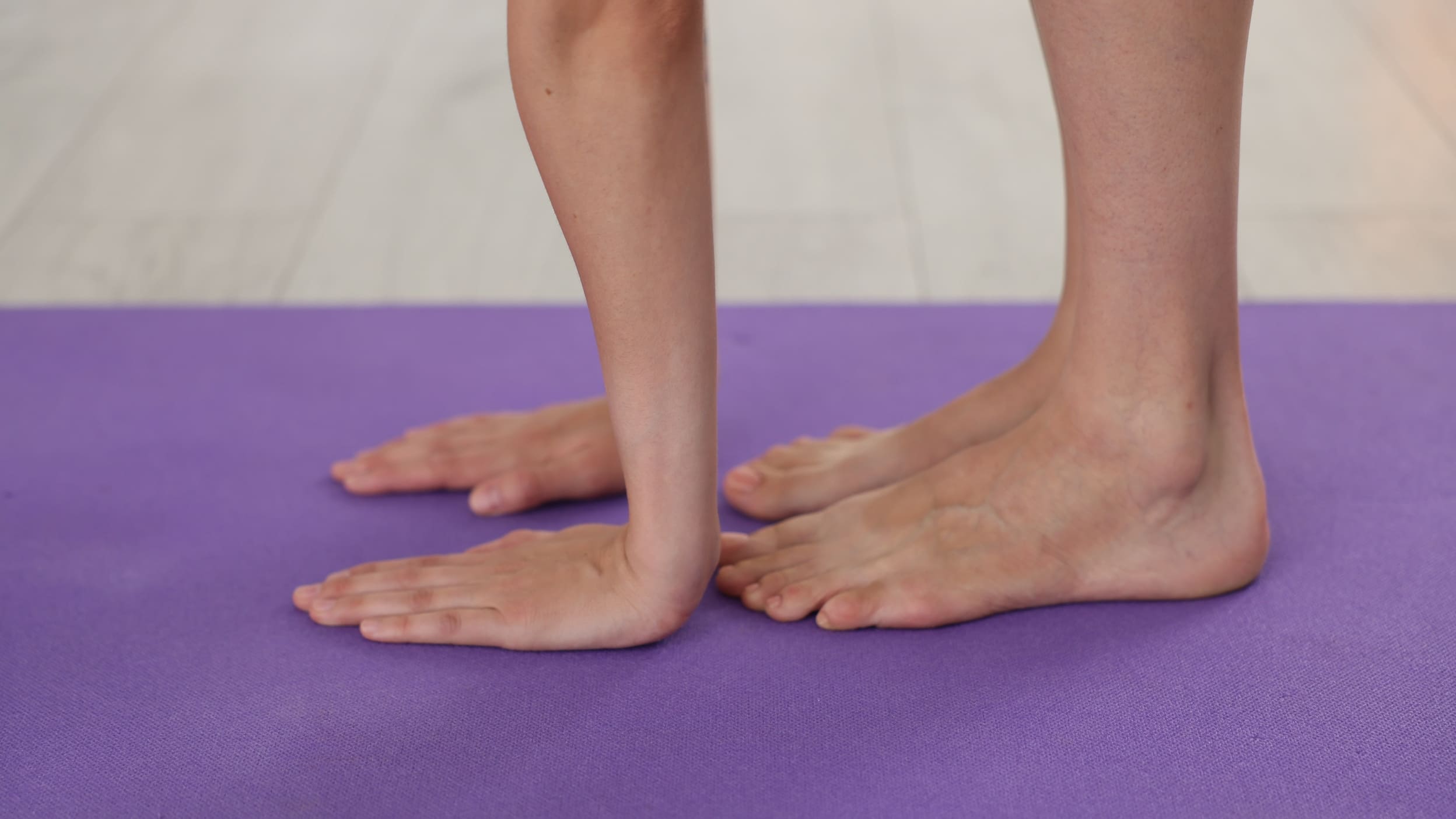
The correct foot pressure pattern for balance is simple but powerful. Imagine your foot as a tripod: one point at your big toe, one at your little toe, and one at your heel.
Each of these points has a purpose:
- Big Toe: Anchors the arch and stabilizes knee alignment. Without enough big toe pressure, your knees may cave inward.
- Little Toe: Supports lateral stability and prevents your ankles from rolling outward.
- Heel: Grounds your body and connects your glutes and hamstrings to the movement chain.
Maintaining this tripod contact keeps your body aligned from the ground up. It distributes pressure evenly, helps activate the right muscles, and prevents overcompensation.
Women often shift weight toward the inside of their feet because of wider hips and pelvic angles. This shift leads to pronation, flat arches, and unstable posture. Retraining the body to press evenly through the three points improves alignment instantly.
Here’s an exercise I often teach:
- Stand barefoot with your feet shoulder-width apart.
- Slowly shift your weight forward and back until you find the point where your big toe, little toe, and heel all make equal contact with the ground.
- Hold this position for 20 seconds, then perform a few bodyweight squats or lunges while maintaining that feeling.
This simple awareness drill builds neuromuscular control and teaches you to feel what true stability should be.
Common Foot Pressure Mistakes Women Make in Training
Over the years, I’ve seen the same mistakes again and again, even from experienced athletes. These errors may seem small, but they have a big impact on performance and joint health.
1. Leaning too far into the toes.
This shifts the center of gravity forward, increasing strain on the knees and reducing glute activation.
2. Collapsing the arches.
When the arches collapse, the ankles roll inward, which affects hip and knee alignment. This is common in women with flexible or flat feet.
3. Favoring one side.
Most people have a dominant leg, which causes uneven pressure. Over time, this imbalance leads to asymmetrical strength and potential injury.
4. Wearing cushioned or unstable shoes.
Soft shoes may feel comfortable, but they reduce sensory feedback from the ground. That disconnect makes it harder to stabilize or control movement.
Awareness is everything. When I started paying attention to my own foot pressure, my lifts changed overnight. I stopped wobbling during squats, my core felt more engaged, and I noticed fewer aches in my knees. Sometimes the fix isn’t adding more strength but restoring proper alignment.
How to Improve Foot Mechanics and Weight Distribution
Training your feet may not sound exciting, but it’s one of the smartest things you can do for long-term performance and joint health. Here’s how I help clients build better mechanics and awareness.
Train Barefoot or in Flat Shoes
Whenever possible, perform warm-ups or light lifts without shoes. It strengthens the small stabilizing muscles and improves your ability to feel the ground.
Use Controlled Tempos
Slow, intentional movements reveal imbalances. Try a three-second descent in your squat or lunge and notice where the weight shifts. Correct it in real time.
Apply the Tripod Principle
Consciously press into the big toe, little toe, and heel throughout every lift. Over time, your body will begin doing this automatically.
Strengthen the Feet
Simple drills like toe spreads, towel curls, and arch lifts enhance control. Stronger feet mean more stable movement.
Check Your Surfaces
Avoid overly soft mats when working on balance or form. Harder surfaces give clearer feedback and build better proprioception.
One of my clients, a runner turned weightlifter, struggled with knee discomfort during squats. After assessing her stance, I noticed she was rolling onto her arches and losing heel contact. Within a few weeks of focused footwork, her knee pain disappeared, and she added more weight with less effort. Sometimes it’s not about pushing harder but about reconnecting to your base.
Practical Balance Exercises for Female Fitness Training
Balance training doesn’t just improve stability; it enhances coordination, posture, and control. The following exercises help reinforce proper foot pressure and alignment.
1. Single-Leg Romanian Deadlift
Stand on one leg, hinge at the hips, and extend the opposite leg behind you. Keep all three points of contact grounded on the standing foot. This builds glute strength and balance simultaneously.
2. Split Stance Hold
Hold a lunge position for 20 to 30 seconds. Focus on equal weight distribution between the front and back foot while keeping both heels grounded.
3. Barefoot Calf Raises
Perform these slowly while keeping the big toe and little toe pressed into the ground. This strengthens your arches and improves control.
4. Balance Board or Bosu Work
Once your base strength is built, introduce an unstable surface to challenge your proprioception. The goal isn’t to wobble more but to maintain control longer.
5. Heel-to-Toe Walking
This simple but powerful drill develops focus, stability, and coordination. Walk in a straight line, placing your heel directly in front of your toes each step.
Consistency is key. Just five minutes of balance work a few times per week can completely change your awareness and performance.
Mini Case Study: How Fixing My Foot Pressure Changed My Training
A few years ago, I hit a plateau. My lifts weren’t improving, and I often felt unstable under heavier weights. I decided to film my form from different angles. Watching those videos was humbling. My heels were lifting slightly during squats, and my pressure kept shifting toward my toes.
I made foot pressure my top priority for a month. I trained barefoot, did balance drills, and paused between reps to feel my contact points. At first, it felt awkward, but after a few weeks, my movements became automatic and efficient.
Within two months, I increased my squat by 20 pounds, eliminated knee discomfort, and felt more balanced in everyday movement. It wasn’t magic; it was awareness and practice. That experience taught me that strength begins where you least expect it at your feet.
FAQs
1. How does foot pressure affect balance in female fitness training?
Foot pressure determines how your muscles activate and stabilize during movement. Proper distribution keeps you aligned and improves strength and coordination.
2. What is the correct foot pressure pattern for balance?
The ideal pattern is the tripod position: equal pressure between the big toe, little toe, and heel. This promotes stability and prevents overcompensation.
3. Can correcting foot pressure help prevent injuries?
Yes. Balanced pressure reduces stress on the joints, improves posture, and decreases the risk of knee, hip, or lower back pain during training.
4. How can I tell if my pressure is uneven?
Film your lifts or try balancing barefoot with eyes closed. If you sway forward or inward, your pressure needs adjustment.
Final Thoughts
Balance doesn’t just come from strong abs or good coordination. It starts from the ground up. Once you master your female fitness foot pressure pattern for balance, everything else improves your form, your posture, your strength, and even your confidence.
I’ve seen it with clients and experienced it myself. When you reconnect with your base, your lifts feel easier, your joints move better, and your body feels powerful in ways that surprise you.
So before your next workout, take a moment to notice your stance. Feel where your weight falls. Adjust until you’re grounded through your big toe, little toe, and heel. That’s where true stability begins.
When you move with intention and balance, every rep feels more connected, every lift more confident. And over time, that awareness doesn’t just change how you train it changes how you move through life.