Table of Contents
When I started my fitness journey, I thought I was doing everything right. I was lifting, squatting, and following structured programs. But something still felt off. I would finish my workouts strong but notice small imbalances creeping in. My right leg felt more stable, my left knee ached, and I constantly struggled with posture and coordination.
At first, I brushed it off as fatigue or poor form. Then one day during a workout, I lost my balance mid lunge and realized how unsteady my foundation really was. That moment changed everything. My coach told me, “Balance isn’t a bonus. It’s the base of strength.” That advice stuck with me.
I decided to commit to single leg training. It felt awkward at first. I wobbled, stumbled, and even laughed at myself. But each rep taught me something new about control and awareness. Within weeks, my stability improved dramatically. My posture felt natural, my hips aligned, and my movements became more fluid.
That experience taught me one of the most important lessons in fitness and life. Balance is not about perfection. It is about control, presence, and patience.
Why Balance Is the Hidden Foundation of Female Fitness
Many women overlook balance training because it doesn’t look as impressive as heavy lifting or intense cardio. But balance is the silent foundation of all physical movement. Without it, you can’t move efficiently, lift safely, or prevent injury.
When I began focusing on balance, I realized how much it affected everything else including strength, coordination, and even energy. Balance training activates stabilizing muscles that traditional exercises often ignore. These small muscles, found deep within the core, hips, and feet, are essential for alignment and overall strength.
For women especially, balance work is transformative. Hormonal fluctuations, posture changes from sitting, and lifestyle habits can affect stability more than we realize. During certain parts of my menstrual cycle, I noticed my balance was worse. Instead of getting frustrated, I used those moments to slow down and focus on control.
The stronger my balance became, the more confident I felt, not just in workouts but in daily life. I could move with purpose, carry groceries without wobbling, and even run without knee pain. Balance became my foundation for strength, both physically and mentally.
The Science Behind Single Leg Exercises for Women
Single leg training might seem simple, but it challenges your body in ways traditional two leg movements never could. When you stand or move on one leg, your entire kinetic chain from your feet to your core must coordinate to keep you stable.
Science backs this up. Research shows that single leg training activates stabilizer muscles like the glute medius, obliques, and deep abdominal muscles, improving not just balance but functional strength. These muscles support your joints, spine, and hips, preventing injury and improving posture.
Single leg movements also train your brain. When you balance on one leg, your body constantly sends signals to your nervous system, improving coordination, focus, and proprioception, which is your awareness of where your body is in space.
As a coach, I’ve seen how these exercises transform my clients. One woman I worked with struggled with chronic knee pain from running. After three weeks of consistent single leg work, her pain nearly disappeared. Strengthening her stabilizers gave her better control, alignment, and shock absorption.
What’s even better is that single leg training doesn’t require fancy equipment. Bodyweight is enough to build stability, and once you master that, you can add resistance gradually.
My Favorite Single Leg Fixes That Improved My Balance
After years of trial, error, and wobbling, I’ve found a few single leg exercises that made the biggest difference in my stability, confidence, and strength.
1. Single Leg Glute Bridge
Lie flat on your back with one leg extended and the other bent. Drive through your heel to lift your hips until your body forms a straight line from shoulders to knee. This exercise isolates one glute at a time, improving symmetry and pelvic control.
2. Bulgarian Split Squat
Stand a few feet in front of a bench or step. Place one foot behind you and lower into a lunge on the front leg. Keep your chest tall and your core engaged. This move builds leg strength while enhancing balance and mobility.
3. Single Leg Deadlift
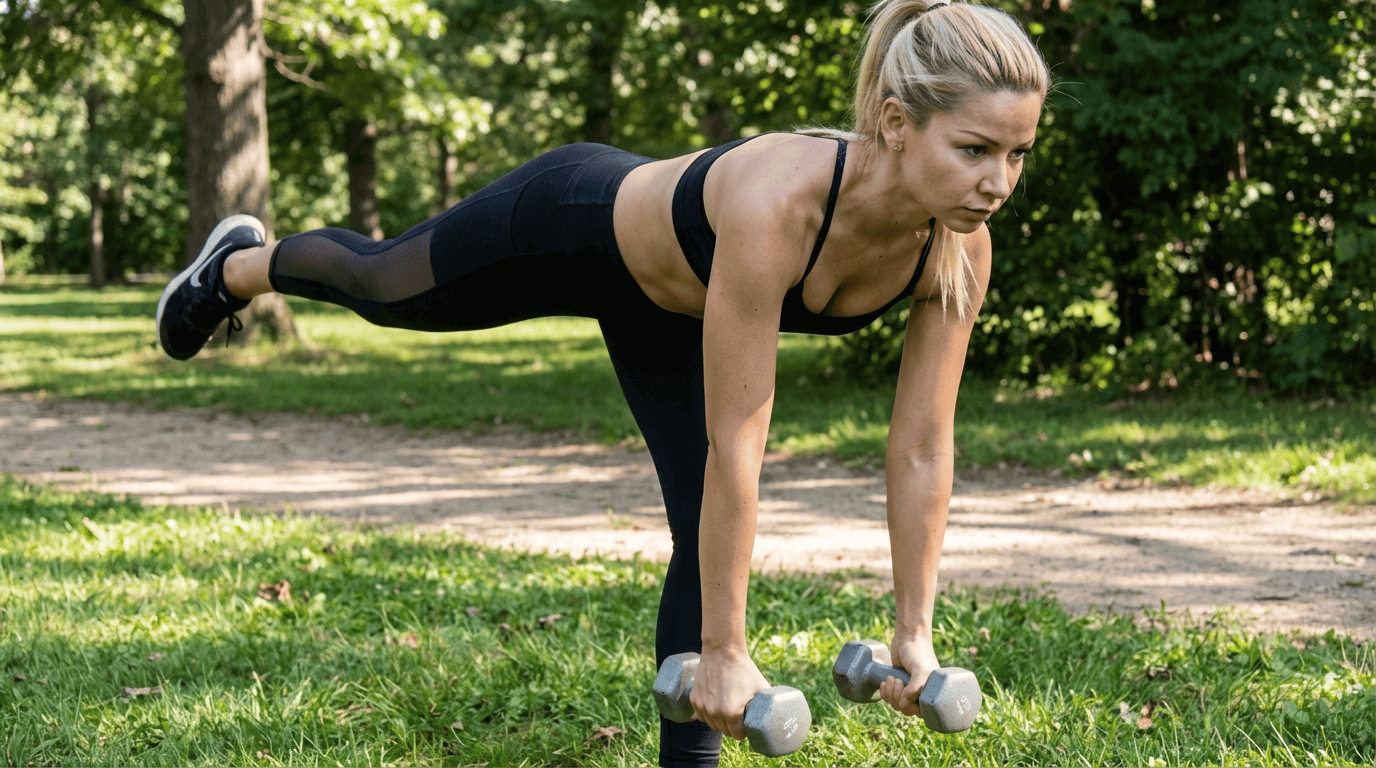
With a slight bend in your standing leg, hinge forward at the hips while extending your other leg behind you. Keep your spine neutral and core tight. This exercise improves hip stability, core strength, and posture.
4. Step Ups
Step onto a sturdy platform, driving through your heel as you lift your body up. Control your descent and alternate legs. Step ups strengthen your glutes, quads, and core while mimicking natural movement patterns.
5. Standing Leg Hold with Reach
Stand on one leg, lift the other slightly, and hold. Reach your arms forward, then overhead. This simple exercise improves focus, balance, and stability in your supporting leg.
These exercises don’t just build muscle, they connect your mind and body. Every time I practiced them, I learned to slow down, focus on my breathing, and listen to my body’s feedback.
Common Mistakes Women Make with Balance Training
Balance training seems straightforward, but I’ve seen many women make the same avoidable mistakes that slow progress and cause frustration.
Mistake 1 Moving too fast
Balance requires patience. Quick, uncontrolled movements don’t engage stabilizer muscles properly. Slow and steady always wins.
Mistake 2 Ignoring the feet
Your feet are your foundation. Wearing thick shoes or not engaging your toes limits your stability. I often train barefoot to improve awareness and control.
Mistake 3 Skipping core engagement
Without an active core, balance training becomes much harder. Engage your abs lightly as if bracing for a gentle tap to the stomach.
Mistake 4 Avoiding discomfort
Many women stop when a move feels unsteady. That’s the exact moment your body starts learning. Wobbling means progress.
Once I corrected these mistakes, my balance and strength improved dramatically. It wasn’t about perfection but about consistency and awareness.
How Hormones Influence Balance and Strength
This was one of the most eye opening discoveries in my journey. Hormones affect nearly everything, including how stable and strong we feel. Once I started syncing my balance training with my menstrual cycle, everything changed.
During the follicular phase, when estrogen rises, I noticed my coordination improved and my body felt more agile. This is the perfect time for challenging single leg exercises.
Around ovulation, energy and focus peak. My balance feels effortless here, so I use it to practice more complex movements or heavier weights.
During the luteal phase, progesterone levels rise, sometimes causing joint looseness and fatigue. I use this time to slow down and focus on control and alignment.
Finally, during menstruation, I give myself permission to rest or do gentle mobility work. Balance isn’t just physical, it’s about listening to your body’s needs and responding accordingly.
Understanding these hormonal shifts made my training more intuitive. Instead of fighting my body, I learned to move with it, and that harmony improved both my results and my mindset.
How to Add Single Leg Training to Your Routine
Adding balance work doesn’t mean overhauling your entire routine. Small, consistent additions make the biggest difference.
Here’s an example of how I structure my week.
| Day | Focus | Single Leg Exercise | Sets x Reps |
| Monday | Strength | Bulgarian Split Squat | 3 x 10 each leg |
| Wednesday | Mobility and Core | Single Leg Glute Bridge | 3 x 12 each leg |
| Friday | Stability | Single Leg Deadlift | 3 x 8 each leg |
| Sunday | Recovery | Standing Balance Hold | 3 x 30 second holds |
If you’re new, start with bodyweight only. Focus on posture and breathing. Once you feel confident, add light dumbbells or a resistance band.
I also recommend integrating balance work into everyday life. Try standing on one leg while brushing your teeth or waiting in line. These small habits reinforce your stability without needing extra gym time.
Consistency is key. I’d rather see someone do five minutes of single leg training daily than one long session every few weeks.
Real Results What Changed for Me
After several months of consistent single leg training, the changes went far beyond what I expected. My workouts became smoother and more powerful, but the biggest difference was in how I felt outside the gym.
My posture improved, I had fewer aches, and my movements felt more coordinated. My running stride became stronger, my hips stopped aching after long days, and I could finally hold balance poses in yoga without wobbling.
Even emotionally, I noticed a shift. Single leg training requires focus and patience, and those qualities spilled into my daily life. I learned how to slow down, breathe through frustration, and approach challenges with steady confidence.
That’s the thing about balance. It’s not just about stability on one leg. It’s about learning to stay centered no matter what life throws your way.
FAQs
How do I improve balance using single leg exercises?
Start small and focus on form. Bodyweight exercises like single leg glute bridges or step ups build stability and control before adding weight.
What is the best single leg exercise for beginners?
The Bulgarian split squat is one of the most effective for balance, strength, and mobility. Use support like a wall or chair if needed.
Can single leg training improve core and hip stability?
Absolutely. Single leg exercises activate deep stabilizer muscles that strengthen your core, hips, and lower back.
Final Thoughts
When I first committed to single leg training, I thought it was just a side addition to my routine. But it became one of the most transformative shifts in my entire fitness journey.
Balance training taught me that strength isn’t just about lifting heavier. It’s about control, awareness, and harmony between body and mind. It improved how I move, how I think, and how I handle stress.
If you’ve been overlooking balance training, now is the time to start. Begin with simple single leg moves, stay patient, and focus on how your body feels. Balance is something you build intentionally, and it rewards you with stability, strength, and confidence in every part of life.