Table of Contents
When I first began strength training, I focused mainly on what I could see in the mirror, my abs, legs, and arms. Like most women, I wanted visible results fast. But after months of consistent training, something was off. My lower back ached, my knees felt unstable, and I noticed my posture slowly collapsing forward.
That was when a coach told me I was neglecting the most powerful part of my body: the posterior chain. It’s the series of muscles that run along the back of your body, your glutes, hamstrings, spinal erectors, and lats. For women, this chain isn’t just about strength; it’s about balance, stability, and energy flow.
Once I began focusing on my posterior chain, my entire body transformed. My core became stronger, my movements more controlled, and I finally built that sculpted, lifted look that so many women chase. What surprised me most was that the change started with one foundational move.
The One Move That Changes Everything
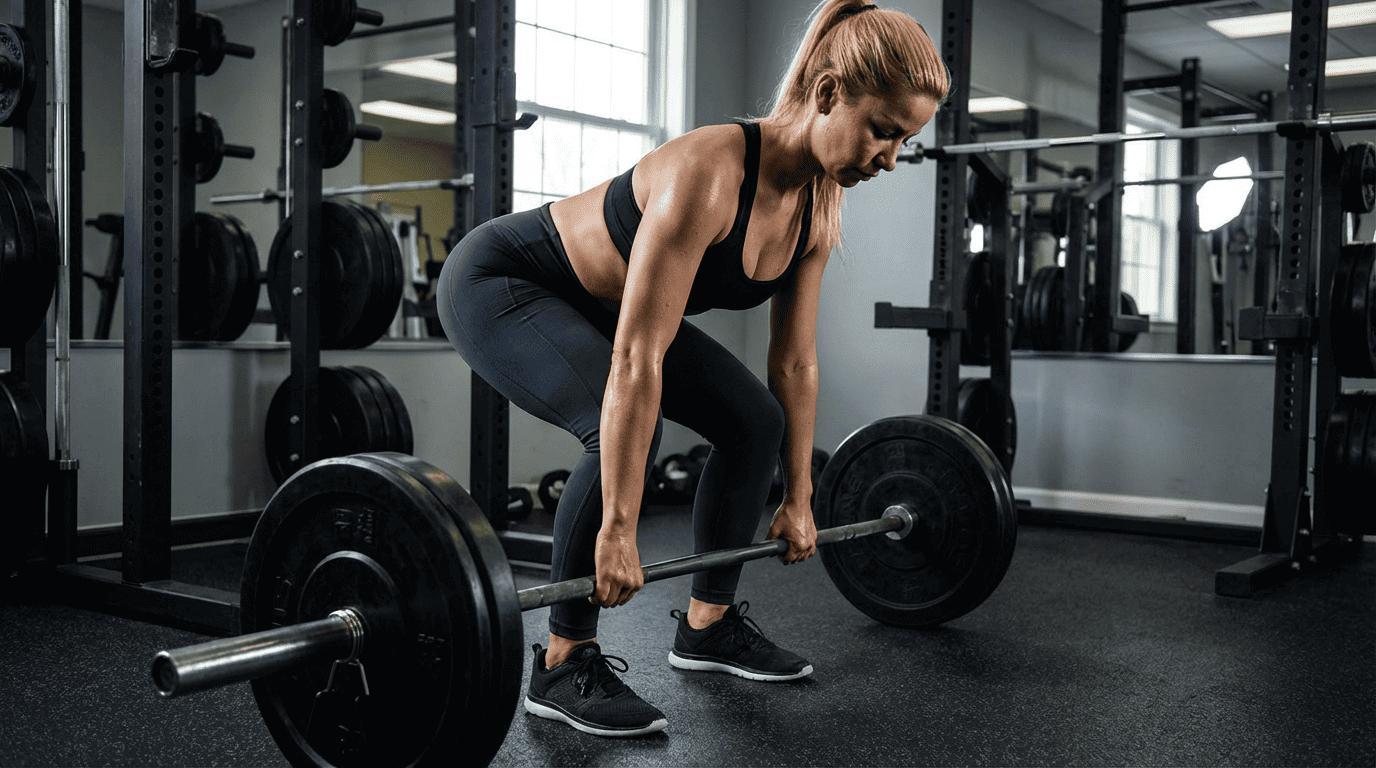
If I could only teach one move to every woman I coach, it would be the Romanian Deadlift, often called the RDL. Whether you’re a beginner working with bodyweight or an advanced athlete loading a barbell, the RDL is a game-changer. It strengthens every muscle in the posterior chain, improves posture, and boosts power without requiring complex equipment or techniques.
The first time I performed RDLs properly, I felt muscles in my hamstrings and glutes activate in ways they never had before. It wasn’t just another leg day exercise; it was a movement that changed how I walked, stood, and even carried myself.
Unlike traditional deadlifts that focus on lifting heavy from the floor, the RDL emphasizes control, stability, and precision. It teaches your body how to hinge from the hips, a foundational movement pattern that underpins almost every functional exercise.
This one move builds strength from the ground up while teaching balance and body awareness. When done correctly, it doesn’t just tone; it transforms how you move.
How This Move Boosts Strength and Balance
The RDL works because it trains your body as a connected system. Instead of isolating muscles, it strengthens the entire posterior chain through a single controlled motion.
1. Builds Glute and Hamstring Power
Most women struggle to engage their glutes properly. RDLs target the glutes and hamstrings directly, helping them activate more efficiently. Strong glutes not only enhance your shape but protect your lower back and knees.
After just a few weeks of consistent RDLs, I noticed how much more power I had during squats and runs. It’s incredible how strengthening the back side of your body improves performance everywhere else.
2. Improves Posture and Core Control
A strong posterior chain supports an upright, confident posture. RDLs strengthen the spinal stabilizers and deep core muscles that hold you tall. This is especially important for women who sit for long hours or experience hormonal fatigue that affects posture.
When I started integrating RDLs weekly, my chronic back pain disappeared, and I felt taller, more stable, and even more grounded in everyday movements.
3. Protects the Lower Back
The RDL teaches one of the most essential skills in fitness, hip hinging. Most back injuries in women occur because they round the spine instead of hinging at the hips when lifting or bending. Once you master this, you unlock safer movement patterns for both workouts and daily life.
4. Boosts Functional Strength
Posterior chain strength translates directly into daily life. Lifting groceries, playing with your kids, or hiking up a hill all become easier. Your body moves as one cohesive unit instead of over-relying on small, fatigued muscles.
5. Enhances Physique and Balance
RDLs sculpt and lift the glutes, tighten the hamstrings, and improve overall symmetry. The result isn’t just strength; it’s balance. A strong posterior chain gives your body a more athletic, natural shape that looks healthy and powerful.
Form Breakdown and Common Mistakes
Getting the RDL right requires patience and attention to detail. When performed properly, it’s one of the safest and most effective exercises in female fitness.
Step-by-Step Form
- Stand with feet hip-width apart and a soft bend in your knees.
- Hold dumbbells or a barbell in front of your thighs. Keep your chest up and shoulders back.
- Engage your core and start hinging at your hips. Push your hips back like you’re closing a door behind you.
- Keep the weights close to your legs and lower them until you feel a stretch in your hamstrings.
- Maintain a neutral spine and avoid rounding your shoulders.
- Drive through your heels to return to standing, squeezing your glutes at the top.
Common Mistakes to Avoid
- Rounding the back: Always keep your chest lifted and spine neutral.
- Over-bending the knees: The RDL is a hinge, not a squat. Keep the movement in your hips.
- Rushing the rep: Move slowly to feel tension in your hamstrings and glutes.
- Lifting too heavy: Master form first, then increase load. Precision matters more than power here.
When I teach this move to clients, I often have them start with a broomstick or resistance band. Once they learn the hinge pattern, adding weight becomes effortless and natural.
Cycle-Based Training Tips for Posterior Chain Gains
Our hormones influence everything from energy levels to muscle recovery. Tailoring your posterior chain training to your menstrual cycle can maximize results and reduce fatigue.
Menstrual Phase (Days 1 to 5)
Energy may dip, so focus on light movement and form. This is a great time to refine your RDL technique or perform mobility-based variations.
Follicular Phase (Days 6 to 14)
Estrogen rises, making this the perfect time to increase training volume and intensity. Your coordination, strength, and recovery are at their peak. Aim for heavier RDL sets or higher reps here.
Ovulatory Phase (Days 15 to 17)
You’re at your strongest and most powerful. This is an ideal window to test your limits safely. I often challenge myself with barbell RDLs or slower tempos during this phase.
Luteal Phase (Days 18 to 28)
Progesterone increases, and energy can fluctuate. Focus on control and stability rather than intensity. Single-leg RDLs or lighter dumbbell work fit perfectly here.
By syncing training intensity with your cycle, you enhance performance while supporting hormonal health and avoiding burnout.
Real-World Client Results
One of my clients, Emma, came to me with persistent knee pain from running. She had strong quads but underdeveloped hamstrings. Within six weeks of integrating RDLs, her pain reduced significantly, and her running stride became more balanced.
Another client, Nadia, struggled with posture and lower back fatigue from long hours at a desk. We started with light dumbbell RDLs twice a week. After a month, she stood taller, felt stronger, and noticed visible definition in her hamstrings.
The results go beyond aesthetics. Women often tell me they feel more powerful and in control of their bodies once they build their posterior chain strength. It’s like unlocking a hidden reservoir of energy they didn’t know they had.
Complementary Exercises for Extra Activation
The RDL can stand alone, but pairing it with a few targeted moves amplifies results and improves activation.
- Glute Bridges: Ideal for activation before your main lifts.
- Kettlebell Swings: Great for power and conditioning.
- Back Extensions: Strengthen the spinal erectors for better posture.
- Single-Leg RDLs: Improve balance and core control.
- Hamstring Curls: Perfect for isolation and recovery days.
I often structure these as accessory exercises after the RDL. Together, they build a well-rounded posterior chain that looks and functions beautifully.
FAQs
1. What is the best posterior chain exercise for women?
The Romanian Deadlift is the most effective exercise for activating and strengthening the glutes, hamstrings, and back muscles simultaneously.
2. Can one move really strengthen my entire posterior chain?
Yes. When performed with proper form, the RDL engages nearly every major muscle on the back side of your body, improving power, balance, and posture.
3. Is the RDL safe for beginners?
Absolutely. Start with light weights or even bodyweight to master the hinge movement. Focus on form before adding load, and progress gradually.
Final Thoughts
Strengthening the posterior chain isn’t just about building a stronger body; it’s about creating a foundation for movement, confidence, and longevity. The Romanian Deadlift is the simplest and most effective way to do that.
When I first mastered this move, I realized it wasn’t just an exercise; it was a skill. It taught me how to use my body as one connected system, how to move efficiently, and how to trust my strength.
Every woman deserves to feel powerful from the ground up. The RDL does more than tone muscles; it teaches balance, alignment, and control. Over time, it reshapes how you carry yourself, both physically and mentally.
If you commit to one move this month, let it be this one. Learn it, feel it, and watch your body transform. The power you build in your posterior chain will follow you everywhere, in your workouts, your posture, and your life.