Table of Contents
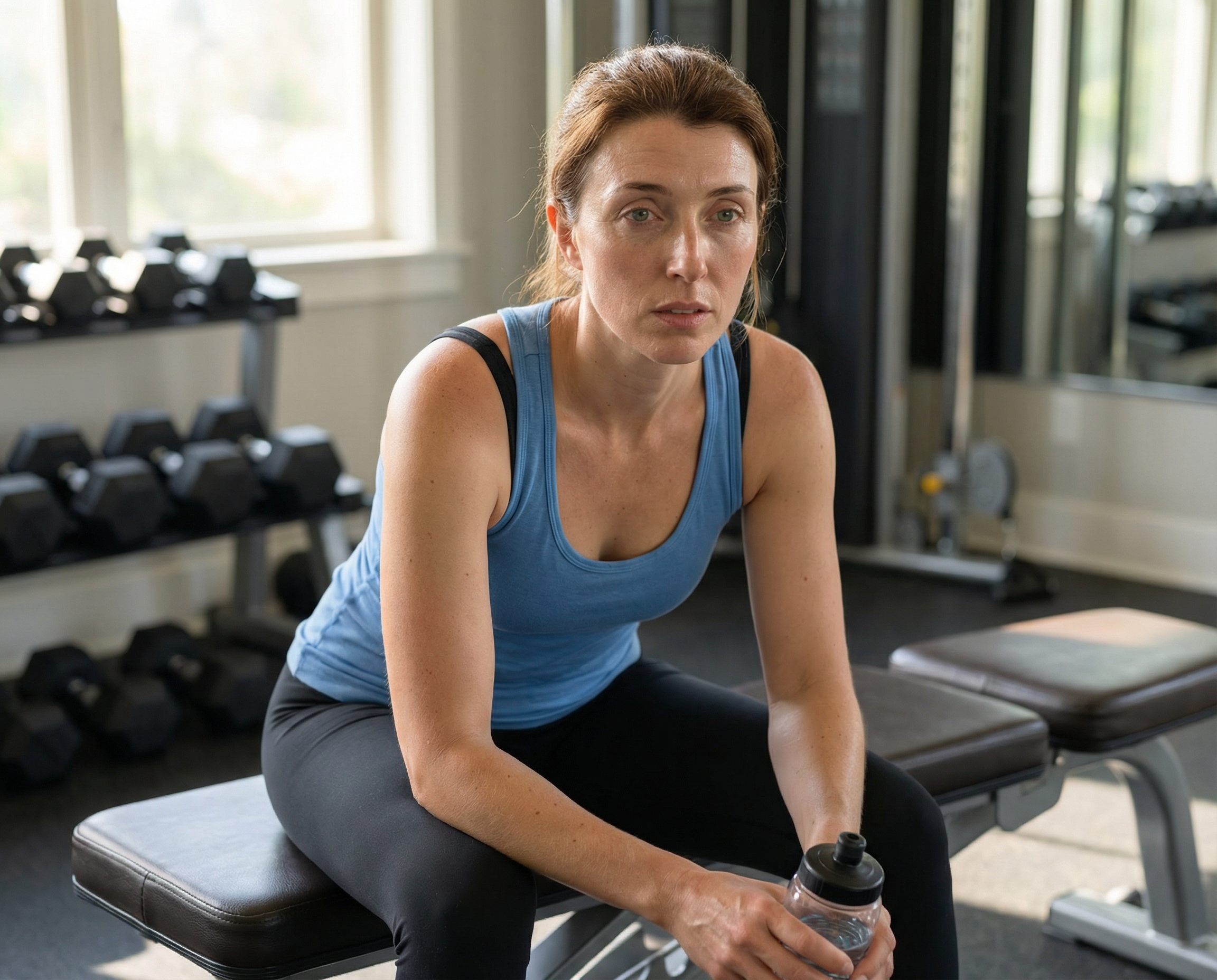
It happens like clockwork. You’ve been crushing your workouts for two weeks—hitting PRs, feeling energized, and recovering fast. Then, suddenly, everything changes.
The weights feel 20kg heavier. You are winded after your warm-up. Your motivation has vanished, and you feel “puffy” and weak.
Your first instinct is probably to blame yourself: “I’m being lazy,” or “I’m losing progress.”
Stop right there. You aren’t regressing. You have simply entered the Luteal Phase of your cycle. Your biology has shifted, but your routine hasn’t.
At A Glance: The 3 Main Causes
If you are struggling to lift 7-10 days before your period, it usually comes down to these three biological roadblocks:
- 1. Lack of Key Nutrients: You are burning through minerals like Magnesium and Iron 2x faster.
- 2. You have inflammation: High progesterone raises your body temp and inflammation, killing recovery.
- 3. You aren’t training with “Periodization”: You are training for a male 24-hour cycle, not a female 28-day cycle.
The Real problem – Science
Part of the issue is that most sports science has historically been based on male physiology.
For a long time, the menstrual cycle was seen as too complex or variable to factor into sports and training research, which means a lot of what women follow today was never really designed with them in mind.
It’s been well studied by the National Library of Medicine US gov body
What can be done?
So we started looking into what actually helps women stay consistent with training across their cycle.
What kept coming up wasn’t a single ingredient or quick fix, but a combination of targeted support that adapts depending on the phase. Things like magnesium, adaptogens such as ashwagandha and rhodiola, iron, saffron, and anti-inflammatory compounds like turmeric and boswellia all appear to play a role in supporting energy, recovery, mood, and PMS symptoms at different points in the cycle.
Around the same time, FemaleFitness editor and strength coach Dr Stephanie Dor was researching similar approaches to better support women’s training and recovery.
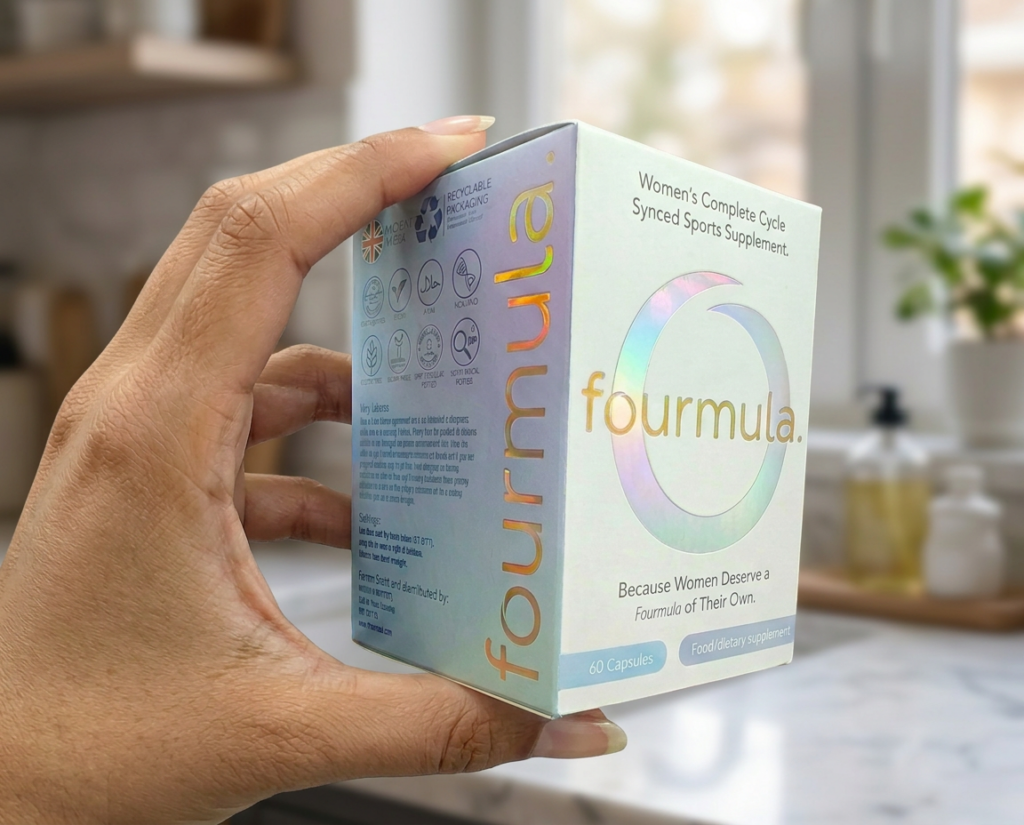
In that process, one solution that stood out was Fourmula, a cycle-synced system designed specifically around these changing needs.
Why it works
Fourmula takes a different approach to most supplements. Instead of using the same formula every day, it separates support into two distinct blends:
- Phase A (The Power Blend): For your high-energy weeks (Follicular/Ovulatory).
- Phase B (The Recovery Blend): For the Luteal and menstrual phases.
How Phase B Solves The Luteal Crash:
During the luteal and menstrual phases, energy dips, inflammation increases, and recovery tends to feel slower, which is where many women notice the biggest drop-off in training consistency.
Phase B appears to focus on supporting that shift, with ingredients linked to blood sugar regulation, replenishing key nutrients like magnesium and iron, and helping to manage inflammation.
The Result? Reduce the friction many women feel during these phases, and make training feel more manageable and consistent.
What stood out was how comprehensive it felt. It didn’t just include the ingredients we’d already seen linked to supporting women’s training — it built on them.
In total, it contains 25 ingredients, combining those core elements with a range of more specialised additions we hadn’t come across as often, including things like black maca Root, tropical holy basil, French Montmorency cherry extract, and Himalayan Shatavari root.
But more importantly, it’s not just about what’s included, it’s how it’s structured. The ingredients are split across two phases, designed to support the body differently depending on where you are in your cycle.
How Phase A Supports Your Strongest Weeks:
During the follicular and ovulatory phases, energy, strength, and recovery capacity tend to be higher, which is why many women find these weeks are where progress happens more easily.
Phase A appears to be designed to support that window, with ingredients linked to blood flow (like pure L-citrulline), endurance, and mental focus, helping to make the most of sessions where performance naturally feels stronger.
L-citrulline produces nitric oxide production in the body. A pathway that’s been widely studied in exercise performance and was recognised in Nobel Prize–winning research for its role in blood flow.
Rather than trying to push through lower-energy phases, the approach here is to lean into the weeks where the body is already more responsive, and support that from a training and recovery perspective.
The Hormone Shift: Estrogen vs. Progesterone
During your Ovulation phase (mid-cycle), your estrogen is at its peak. Estrogen is essentially nature’s steroid for women, it aids muscle repair, boosts serotonin (mood), and increases force production.
Once you enter the Luteal phase (days 15-28), estrogen crashes and progesterone spikes.
- The Result: You lose that natural hormonal strength boost. Your neuromuscular system doesn’t fire as efficiently, meaning that 100lbs feels like 120lbs. This isn’t “weakness”; it is a withdrawal of hormonal support.
The Energy Crisis: Insulin Sensitivity Drops
Have you ever felt shaky or exhausted even after eating a pre-workout snack during this week?
In the first half of your cycle, you are very insulin sensitive (you utilize carbs easily for energy). In the Luteal phase, progesterone makes you slightly insulin resistant.
- What this means: Your body struggles to push glucose (carbs) into muscle cells for quick energy. Instead, it wants to store that energy as fat or use fat for fuel.
- The Gym Impact: High-intensity (glycolytic) work like CrossFit or heavy lifting feels significantly harder because your “quick fuel” system is lagging.
The Nutrient Drain (You Are Running on Fumes)
During the Luteal phase, your metabolism speeds up (burning 100-300 extra calories a day). Your body is prioritizing internal tasks (building the uterine lining) over external performance.
Because your body is “busy,” it steals resources:
- Magnesium: Depleted rapidly to manage stress.
- Iron: Drops in anticipation of blood loss.
- Zinc & B-Vitamins: Used for energy production.
Without supplementing these specific nutrients, you are asking your body to sprint on an empty tank.
The Inflammation Spike (Why Recovery Stops)
Blame Progesterone. A sharp rise in progesterone raises your basal body temperature by about 0.5–1.0°F.
This puts your body in a state of higher physiological stress. When you train hard, you create micro-tears in your muscle fibers. Because your baseline inflammation is already high, your body struggles to clear the waste products (lactate) and repair the tissue. This leads to DOMS (Delayed Onset Muscle Soreness) that lasts days longer than usual.
💡 Pro Tip: Check Your Resting Heart Rate If your Resting Heart Rate (RHR) jumps up by 5-10 beats per minute, you are officially in the Luteal Phase. This is your signal to switch your nutrition focus from “Push” to “Protect.”
Frequently Asked Questions
Should I lift heavy before my period? You can, but don’t expect PRs. It is better to switch to hypertrophy (higher reps, lower weight) or maintenance lifting. Your risk of injury increases slightly due to joint laxity and fatigue, so focus on form over weight.
Does working out on your period help cramps? Yes. Light to moderate exercise releases endorphins (natural painkillers) and improves blood flow, which can alleviate cramping. However, high-intensity stressors (like HIIT) can sometimes worsen inflammation during the heaviest flow days.
Why do I gain weight before my period? This is rarely fat gain. The drop in progesterone and the spike in aldosterone cause your kidneys to retain salt and water. This “water weight” can add 3-5lbs to the scale, but it usually flushes out 2-3 days into your period.
Disclaimer: This review reflects personal experience and professional opinion and is not intended as medical advice; results may vary, and readers should consult a qualified healthcare professional before starting any new supplement or training programme.