Table of Contents
If there’s one thing that transformed my upper body strength, it’s realizing that bar control, not weight, was the missing ingredient. When I first started pressing, my focus was all on numbers. I thought that getting stronger meant loading the bar heavier each week. But every time I did, my form wavered, my shoulders felt unstable, and I’d finish my workouts frustrated instead of proud.
Then I learned the truth. Pressing isn’t just about pushing the bar up. It’s about how you manage the bar from start to finish. The steadier you keep it, the more strength you can access. Once I focused on bar control, my lifts became more powerful, efficient, and safer.
It’s like driving a car. You can have a powerful engine, but if your steering is sloppy, you’ll waste energy and risk losing control. The same principle applies to pressing. When you learn how to control the bar path, engage your stabilizers, and align your breath, every press feels smoother and stronger.
The Difference Between Lifting the Bar and Controlling It
I used to think pressing was about brute strength, but lifting the bar and controlling the bar are two very different things. You can push weight without control, but that doesn’t make you strong. It just makes you reckless.
True control means every inch of your movement is intentional. The bar moves in a precise path, your muscles work together, and your body feels solid under the weight. When you control the bar, you stop leaking energy through weak points.
Women often struggle with pressing consistency because our natural joint mobility gives us more movement freedom but less built-in stability. That’s not a weakness. It’s just how our anatomy works. But it means we need to be more deliberate about control and tension.
Once I learned this, I stopped muscling through reps and started mastering them. My pressing improved, and so did my confidence.
My Early Mistakes with Pressing Power
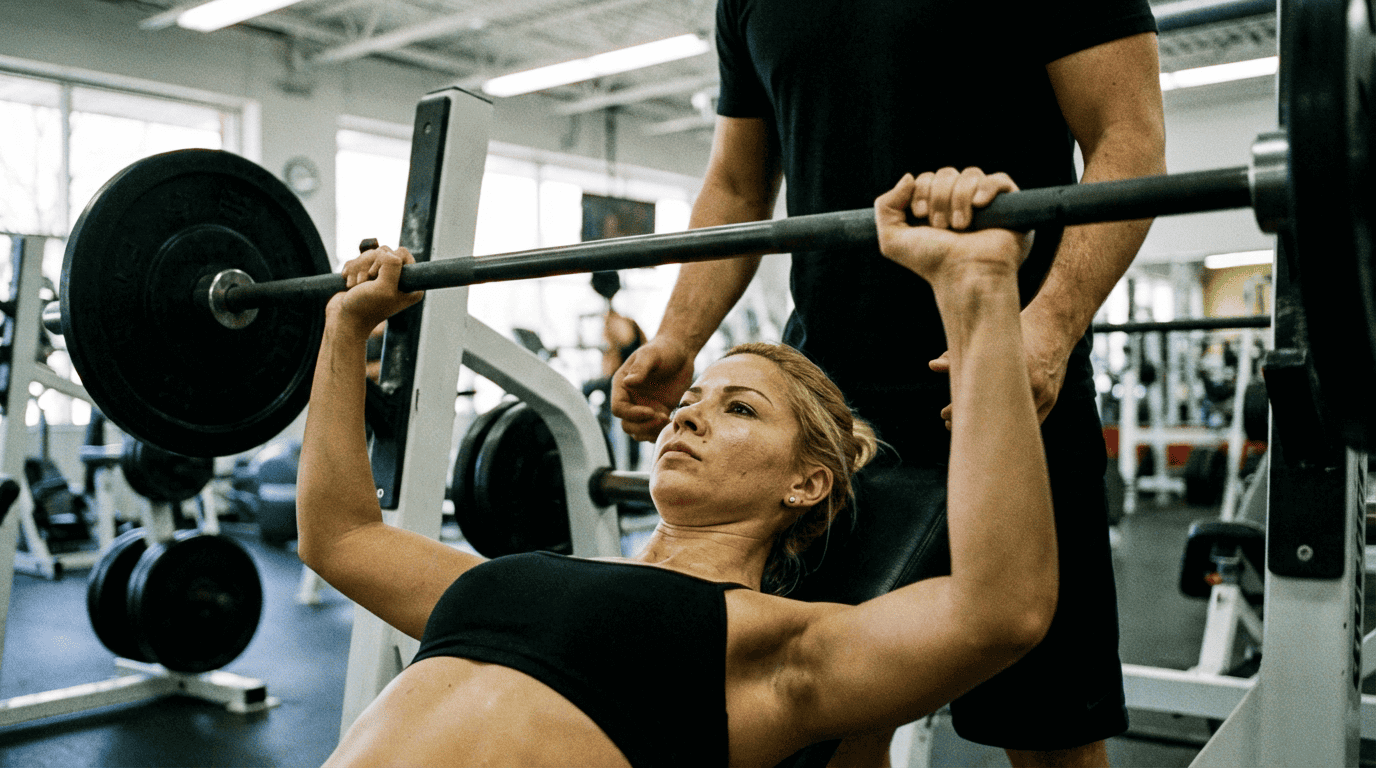
I still remember the frustration of my early bench press sessions. I’d unrack the bar, feel good for the first few reps, and then everything would fall apart. My wrists would tilt, my elbows would flare, and the bar would shake halfway up.
At the time, I blamed my upper body strength. But later, I realized the issue wasn’t strength, it was control. I had enough muscle, but I wasn’t using it effectively. My coach pointed out that my tension disappeared as soon as I started lowering the bar.
He told me, “You have to own the bar the entire time.” That cue stuck with me. When I started treating the bar like something I controlled rather than something I survived, my lifts changed dramatically.
It wasn’t about ego anymore. It was about focus, precision, and awareness. Once I started feeling the connection between my hands, lats, and core, I finally understood what strong pressing really felt like.
The Female Fitness Bar Control Cue Explained
The bar control cue is simple in theory but powerful in execution. It’s the conscious act of maintaining full-body tension and alignment while pressing. You’re not just lifting, you’re commanding the bar.
Here’s how I explain it to clients:
1. Pull the bar apart.
Imagine trying to stretch the bar outward. This activates your lats and triceps instantly, locking your upper body in place. It stops your shoulders from rolling forward and gives you more pressing stability.
2. Screw your hands into the bar.
Rotate your palms slightly outward without moving them. This engages your rotator cuffs, anchors your shoulders, and prevents internal rotation.
3. Keep your body connected.
Pressing isn’t just about arms. It’s a full-body movement. Your legs, glutes, and core stabilize you. Drive your feet into the floor and keep your core firm.
4. Control the bar on the way down.
Don’t let gravity win. A slow, steady descent increases muscle activation and prevents energy loss. The bar should move like it’s on rails.
5. Push with intent, not speed.
When you press up, think about pushing yourself away from the bar, not just driving the bar upward. That mindset keeps your shoulders packed and the bar stable.
These small adjustments build more tension through your whole body. Once you master this cue, you’ll notice your bar path becomes smoother, your strength more consistent, and your risk of injury much lower.
How to Practice Bar Control for Stronger Pressing
Building bar control takes time, but once it clicks, it’s transformative. Here are some ways I practice and teach it.
1. Tempo Pressing
Use a controlled three-second lower, a one-second pause, and a powerful push. This builds awareness and teaches you how to stay tight throughout the lift.
2. Pause Reps
Hold the bar briefly at your chest (for bench press) or just below your chin (for overhead press). That small pause forces your muscles to stabilize and prevents bouncing.
3. Static Holds
Hold the bar at mid-range for 5 to 10 seconds. This helps build tension endurance and teaches your body what control feels like under pressure.
4. Lighter Weight Focus Sessions
Drop your load and focus solely on perfect control. I like to think of these sessions as “technique training.” They strengthen your form without overtaxing your nervous system.
When I started prioritizing these drills, I gained more pressing strength in two months than I had in an entire year of just chasing heavier weights. Control first, then load.
How Shoulder Stability Impacts Pressing Strength
If your shoulders aren’t stable, your bar control will always suffer. This is especially important for women, who tend to have more shoulder mobility but less joint stiffness. Stability doesn’t mean locking your shoulders rigidly. It means maintaining alignment through tension.
I make shoulder stability a non negotiable part of my own training. Before pressing, I warm up with scapular push-ups, band pull aparts, and face pulls. These small movements activate the upper back and prime the rotator cuffs.
Posture plays a big role too. Hours spent sitting or scrolling pull our shoulders forward, which weakens the stabilizers that keep the bar steady. By strengthening the muscles of your upper back, you’ll improve your pressing instantly.
The stronger your scapular control, the more stable your pressing will feel. It’s one of those invisible improvements that changes everything once it clicks.
Using the Bar Control Cue for Different Lifts
The bar control cue works across multiple pressing patterns. It’s adaptable, whether you’re benching, pressing overhead, or working with dumbbells.
Bench Press:
As you lower the bar, pull it apart to engage your lats. Keep your chest lifted and core tight. Push yourself away from the bar to maintain tension through the lift.
Overhead Press:
Grip the bar firmly and screw your hands outward to engage your shoulders. Keep your ribs down and core tight as you press. Imagine stacking your ribs over your pelvis.
Incline or Dumbbell Press:
Focus on controlling each hand independently. Keep your wrists straight and elbows under your wrists to prevent wobbling.
These cues translate to more stable, stronger, and safer presses across all variations. The more intentional you are with your control, the faster you’ll see results.
How Hormones Influence Pressing Performance
Female physiology adds another layer of complexity to pressing strength. Our hormonal fluctuations affect energy, recovery, and even coordination.
During the follicular phase (right after your period), estrogen levels rise. This is when you’re likely to feel strongest, coordinated, and energetic. It’s the perfect time to focus on heavier pressing or refining your form.
During the luteal phase (after ovulation), progesterone dominates, which can make your body feel heavier and less stable. This is a great phase to emphasize control, tempo work, and recovery.
I used to beat myself up when my pressing felt weaker mid-cycle, but once I started tracking my training alongside my hormones, I realized it wasn’t lack of strength. It was biology. Adjusting my approach based on these patterns helped me stay consistent without burnout.
Understanding how your body changes each month allows you to work with your hormones instead of fighting them. It’s not about doing less. It’s about doing smarter.
FAQs
What is the best pressing cue for female upper body strength?
The best cue is to pull the bar apart and create full-body tension. It keeps your shoulders stable, improves control, and maximizes power output.
Why does my bar path feel unstable when I press?
Instability often comes from weak shoulder stabilizers or lack of core engagement. Practice pause reps and upper back activation drills.
Can I improve pressing strength without going heavier?
Yes. Focus on control, tempo, and tension. Strength isn’t just about lifting more. It’s about moving better.
Final Thoughts
Learning bar control was one of the biggest game changers in my strength journey. For years, I chased heavier weights, thinking more load would make me stronger. But it wasn’t until I focused on control, on how I moved the bar instead of how much I lifted, that my progress finally felt real.
Now, every press feels powerful because it’s intentional. I can feel the tension through my lats, the stability in my shoulders, and the control from my hands to my core. My bar no longer wobbles or drifts, it moves where I direct it.
For women especially, mastering control is about more than just lifting better. It’s about understanding your body, building trust in your strength, and creating power through precision.
The next time you press, don’t think about the number on the bar. Think about owning every inch of the movement. Control it, guide it, and let your strength follow. That’s where true power lives.