Table of Contents
I still remember my early years in the gym when I thought every pull day was just about arms. If my biceps burned, I assumed I was training hard. Female fitness pull day cue that activates lats I would finish my workout, look in the mirror, and wonder why my back looked exactly the same. It was frustrating.
I was working hard but not smart. A coach once told me that my lats weren’t firing at all. I was moving the weights, but the wrong muscles were doing the work. That single piece of feedback completely changed my training.
When I finally learned how to activate my lats properly, everything clicked. My posture improved, my back began to take shape, and my waist even looked tighter. Most women never get to that point because no one shows them how to actually connect with their back muscles.
It took time, but once I understood how to feel and engage my lats, my pull workouts finally made sense.
What Makes Women Struggle to Feel Their Lats
After years of training and coaching women, I’ve learned that not feeling your lats isn’t about lack of effort. It’s about connection. There are a few reasons this happens so often.
1. Dominant arms and shoulders
Many women naturally rely on their arms during pulling movements. Our nervous systems often recruit smaller, more mobile muscles first, which means the biceps and shoulders take over while the lats stay quiet.
2. Rounded posture from daily habits
Sitting at desks, scrolling on phones, and slouching all day shortens the chest muscles and weakens the back. When your shoulders are constantly forward, it becomes harder to engage your lats in the correct position.
3. Lack of mind-muscle awareness
This was my biggest obstacle. I used to think pulling harder would solve it, but it didn’t. Without deliberate focus, you can move weights for years without really training your back. Developing awareness takes practice and patience.
When I finally understood that my back wasn’t the problem, my brain connection was, everything changed. I needed a cue that would help me teach my body what to do.
The Game-Changing Cue That Finally Helped Me Engage My Lats
The cue that transformed my training was incredibly simple.
“Drive your elbows down and in toward your ribs.”
It sounds basic, but the shift it creates in your body mechanics is massive. Instead of pulling with your hands or arms, this cue makes your lats the primary driver. I remember the first time I tried it during a lat pulldown. The burn in my back was immediate and deep. I finally understood what proper lat engagement felt like.
I also started to think of my shoulders as the switch that activates my back. Before every pull, I remind myself: shoulders down and back first. That little shoulder pack locks my body into a position where the lats can actually work.
Within a few sessions, my back began to feel alive during every pull movement. Within weeks, my lifts became smoother and stronger. My body finally started to change because I was using the right muscles in the right way.
Now, I use that same cue for myself and every woman I coach. It’s the foundation for building a strong, defined, functional back.
Why Proper Lat Activation Matters for Female Strength Training
Lat activation isn’t just about aesthetics. It influences posture, balance, and overall strength. Once I started feeling my lats truly engage, I realized how much easier it became to perform compound lifts like deadlifts, squats, and even push-ups.
Strong lats do so much more than build definition. They stabilize the spine, support shoulder mobility, and give the body that powerful yet feminine shape. For women especially, this kind of strength training offers four key benefits.
- Improved posture: Engaged lats pull the shoulders back and down, countering the forward roll caused by sitting all day.
- Balanced upper body: When your lats work properly, your shoulders and arms no longer carry all the strain.
- Enhanced performance: Your lats play a vital role in almost every strength movement, even those that don’t seem to involve the back directly.
- Sculpted silhouette: Developing the lats creates a more tapered look through the waist and upper body.
Once I understood this, my goals shifted from chasing “tone” to chasing control. I realized real strength training isn’t about doing more reps it’s about doing them with intention.
Common Mistakes Women Make on Pull Day
Even with the right cue, small mistakes can derail your progress. I’ve made every one of them and learned how much of a difference correcting them makes.
1. Pulling with the arms first
When your elbows bend before your shoulders move, you’re automatically leading with your biceps. Focus on pulling the shoulders down and back before moving the elbows.
2. Shrugging the shoulders upward
This traps the tension in your neck and traps instead of the lats. Keep your shoulders low and your chest open.
3. Overextending your body
Leaning too far back during rows or pulldowns takes the tension off your back. Maintain a neutral spine and control the motion.
4. Using too much weight
If you can’t feel your lats working, the load is too heavy. Lighten up until you can control every inch of the movement.
5. Skipping activation drills
Your back muscles need warming up. A few minutes of scapular retractions or banded pulldowns primes your nervous system for better engagement.
When I fixed these small details, my pull days started to feel more effective and less exhausting. I left the gym with energy instead of frustration.
How to Apply the Cue to Different Pull Exercises
Once you’ve practiced the “elbows down and in” cue, the next step is applying it to each exercise in your pull-day routine. Here’s how I do it.
Lat Pulldown
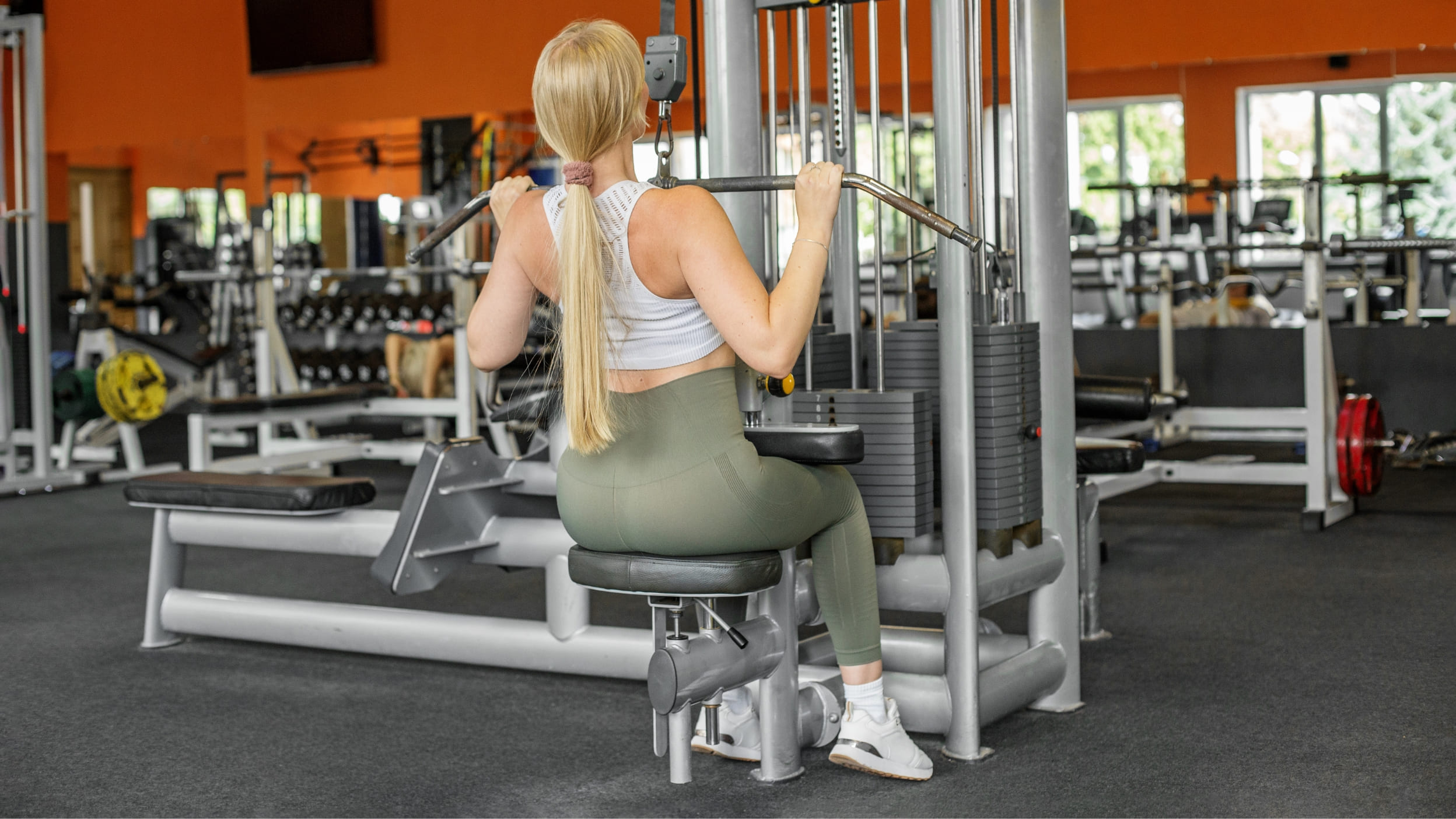
Sit tall, engage your core, and set your shoulders before the bar even moves. Pull your elbows down and inward, imagining you’re tucking them into your sides. At the bottom, squeeze for a second before slowly releasing back to the top.
Dumbbell or Barbell Row
Hinge slightly at the hips and keep your spine straight. Let the weight hang with soft elbows, then pull your elbows toward your waist. Keep them close to your body and avoid rounding your shoulders.
Seated Cable Row
Sit upright with a neutral spine and open chest. Pull your elbows back in line with your torso and focus on bringing your shoulder blades together at the end of the movement.
Pull-Ups or Assisted Pull-Ups
Start by depressing your shoulders before initiating the pull. Imagine pulling your elbows down and slightly back. Lead with your chest, not your chin.
When I began using these cues consistently, my pull-ups finally became smooth and controlled. What had once felt impossible suddenly felt natural.
My Female Fitness Pull Day Sequence for Lat Focus
Here’s the pull day sequence I follow to maximize lat activation and full-back strength.
| Exercise | Focus | Sets x Reps | Notes |
| Lat Pulldown (wide or neutral grip) | Lat activation | 4×10 | Lead with elbows, control the return |
| Single-Arm Dumbbell Row | Unilateral control | 3×10 each side | Focus on full stretch and contraction |
| Seated Cable Row | Mid-back development | 3×12 | Slow tempo, squeeze shoulder blades |
| Face Pulls | Rear delts and posture | 3×15 | Keep elbows high, light weight |
| Assisted Pull-Ups or Inverted Rows | Full back engagement | 3×8 | Drive elbows down, engage core |
| Banded Straight-Arm Pulldown | Finisher | 2×20 | Focus on deep lat contraction |
During every set, I visualize my lats lengthening and shortening with each rep. This mental focus keeps me connected to the muscle. It’s not about chasing fatigue; it’s about precision.
A client once told me she hated pull day because she couldn’t feel her back. After two weeks of practicing this sequence and using the cue, she looked at me during a workout and said, “I get it now.” That’s the moment every trainer loves the moment strength finally connects with understanding.
FAQs about Female Fitness Pull Day Cue That Activates Lats
How do I activate my lats properly on pull day as a woman?
Start by setting your shoulders down and back before every pull. Focus on driving your elbows down and in toward your ribs instead of pulling with your hands.
Why do I feel pull day more in my arms than my back?
This happens when your biceps take over the movement. Lower the weight, slow down the tempo, and consciously lead with your elbows to shift the work to your back.
Can lat activation improve posture and waist definition for women?
Yes. Engaging your lats builds postural strength, supports the spine, and enhances the appearance of a smaller waist by creating balance and proportion.
Final Thoughts
If there’s one thing I’ve learned from years of lifting, it’s that strength isn’t about how much you move but how intentionally you move it. When I finally learned how to activate my lats, it completely changed my perspective on training.
Every rep became more purposeful. Every set felt like progress. I stopped comparing myself to others and started celebrating how efficiently my body could work when I listened to it.
So take your time. Learn to feel your lats, practice the cue, and build your connection with every pull. You’ll notice not just physical changes, but a deeper sense of control and confidence.
True strength doesn’t happen overnight. It grows from awareness, consistency, and trust in your own body. Once you experience that mind-muscle connection, you’ll never train the same way again.