Table of Contents
I still remember the first time I realized how important core strength really was. I had been training for years, lifting weights, running, doing all the right things or so I thought. But one day during a workout, my back seized up during a simple deadlift. It wasn’t my form or my strength that failed me. It was my core.
That moment changed the way I looked at training entirely. Most women, including myself at that time, focus on what they can see in the mirror. We chase toned abs, a stronger lower body, or lean arms, but the invisible work, the deep internal strength that holds it all together, is often ignored.
Core strength isn’t just about building muscle. It’s about stability, posture, and the way you move through daily life. When your core is weak, you feel it everywhere. Your lower back aches, your balance feels off, and even your confidence dips because your body doesn’t feel supported.
Over the years, I’ve watched countless women transform not just their fitness but their energy and mindset through proper core training. It’s a kind of strength that carries over into everything, from how you lift weights to how you sit at your desk or chase after your kids. Once you understand what your core really does, it becomes impossible to train without prioritizing it.
Understanding What the Core Really Is
Let’s get something straight: your core isn’t just your abs. I used to believe that, too. Crunches, sit-ups, leg raises, that was my idea of core training. But the true core is so much more complex and powerful than a few front-facing muscles.
Your core includes your entire trunk, the deep muscles that wrap around your spine like a corset. That means your pelvic floor, diaphragm, obliques, transverse abdominis, and lower back are all part of the equation. Together, they stabilize your entire body.
When these muscles work in harmony, your movements become more fluid and efficient. When they don’t, your body compensates in ways that can lead to imbalance or injury. I’ve seen women with strong legs and arms who still struggle with posture or chronic tension because their deep stabilizers aren’t activated.
One of my clients, for instance, could squat impressive weight but always complained of hip pain. When we shifted focus to core engagement, breathing properly, activating her lower abs, and improving spinal alignment, the pain disappeared. She didn’t need more weight. She needed better control.
That’s the beauty of female fitness when it comes to core strength. It’s not about building bulk or chasing aesthetics. It’s about functionality, feeling strong, supported, and confident in your movement.
How to Build Core Strength With Female Fitness
Building core strength begins with awareness. Before you add resistance or advanced moves, you have to connect your mind and muscles. Most women skip this step and jump straight into intense ab workouts, but I’ve found that slowing down at the start produces faster results in the long run.
Start with breathwork and engagement. Lie on your back with your knees bent and feet flat on the floor. Place one hand on your chest and one on your belly. Inhale deeply, expanding your lower hand while keeping your upper hand still. Then exhale slowly, pulling your belly button in toward your spine. This might feel subtle, but it’s one of the most powerful ways to reawaken your deep core.
Once you can breathe and brace properly, it’s time to move. The goal is to challenge stability while maintaining that connection. In my coaching, I build core routines in four stages:
- Activation: Core breathing, dead bug variations
- Stability: Planks, bird-dogs, Pallof presses
- Strength: Weighted carries, squats, compound lifts
- Dynamic Control: Rotational movements like woodchoppers or ball throws
By layering these movements, you build a foundation that’s both strong and flexible. Over time, you’ll notice improvements not only in your workouts but in everyday movements. Bending, lifting, even walking upstairs feels easier.
Core Workouts for Beginners
If you’re starting out, the key is consistency and control, not speed or intensity. When I first started incorporating core specific training, I only committed to ten minutes a day. It didn’t sound like much, but the difference after a few weeks was undeniable.
Here’s a female fitness core workout routine for beginners that I still recommend:
| Exercise | Sets | Reps | Focus |
| Dead Bug | 3 | 10 per side | Deep core activation |
| Bird Dog | 3 | 8 per side | Core and balance |
| Glute Bridge | 3 | 12 | Posterior chain and stability |
| Forearm Plank | 3 | 30–45 sec | Endurance and strength |
| Side Plank (knees bent) | 2 | 20 sec per side | Oblique control |
Do this three to four times per week, preferably at the start of your workout while your body is fresh.
If you find your lower back straining, reset your form. A strong core isn’t about pushing through discomfort; it’s about finding control. When I first practiced side planks, I could barely hold for 15 seconds without shaking. But within weeks, I felt grounded and stable, and that strength carried into everything from weightlifting to yoga.
The more mindful your movements, the faster your results will come.
The Best Core Exercises for Women at Home
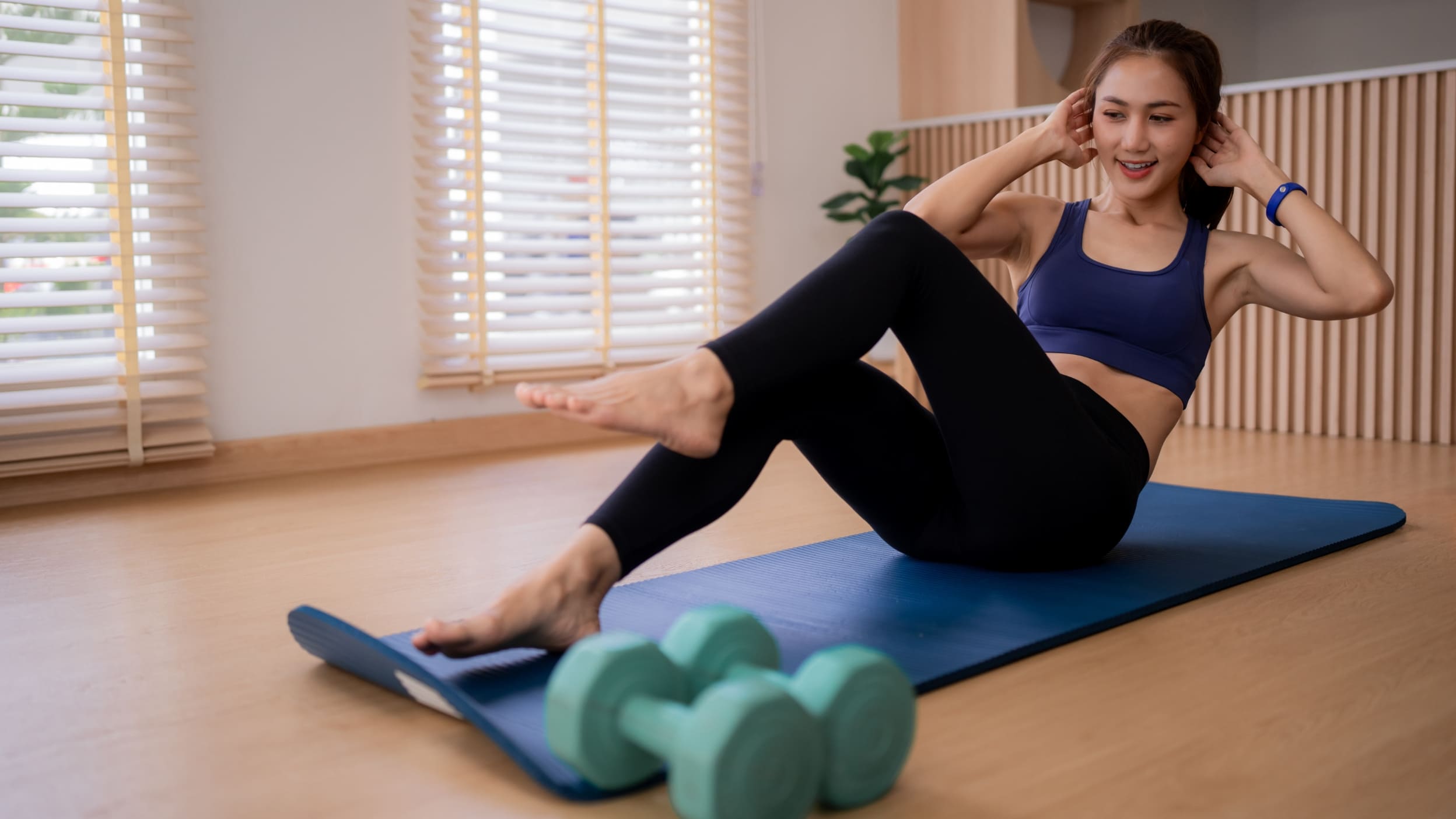
Not everyone has time to hit the gym, and that’s perfectly fine. Some of my most effective training sessions happen right in my living room with nothing more than a yoga mat and resistance band.
Here are a few of my favorite female fitness core strength exercises at home:
- Plank to Shoulder Tap: Strengthens shoulders, hips, and core control
- Glute Bridge March: Builds pelvic stability and lower ab strength
- Mountain Climbers (slow and steady): Increases endurance and total-body coordination
- Standing Resistance Band Rotations: Great for oblique and posture work
- Single-Leg Deadlift (bodyweight or dumbbell): Enhances balance and full-body stability
These movements look simple, but when done correctly, they’re incredibly effective. I often rotate between them depending on my energy level and where I am in my cycle. On high-energy days, I’ll add resistance. On lower-energy days, I focus on form and control.
Training this way keeps you connected to your body rather than working against it.
How Often to Train Core Muscles for Visible Results
Women often ask me how many times a week they should train their core. My answer is always the same: it depends on your goals, recovery, and lifestyle. But as a general rule, three focused sessions a week is ideal for most.
You can also incorporate mini sessions, quick five minute drills, into your warm up or cool down routines. I do this often when I’m short on time. A few rounds of dead bugs and planks are enough to wake up your stabilizers before a full workout.
Visible results usually appear after six to eight weeks of consistent training, but the internal results show up sooner. You’ll stand taller, your movements will feel more controlled, and your body will respond better to all forms of training.
One of my clients once said, “My abs didn’t change overnight, but my posture did.” That’s the kind of progress I love to see because it means you’re building strength that lasts.
How Hormones Influence Core Strength Training
This is something not enough trainers talk about. Women’s bodies change throughout the month, and your core is no exception. I learned this the hard way after years of feeling frustrated when I couldn’t perform as well during certain weeks.
During the follicular phase, right after your period, estrogen levels rise. This is the perfect time for challenging strength and power based workouts. You’ll feel lighter, stronger, and more coordinated. Take advantage of it with weighted core moves and compound lifts.
In the luteal phase, as progesterone increases, your body may feel heavier, and your energy might dip. That’s your cue to shift focus toward control, stability, and breathing. Think slow planks, gentle mobility drills, and mindful movement.
Honoring these hormonal shifts doesn’t make you less disciplined. It makes you smarter. Once I began syncing my training to my cycle, everything changed. My energy became more predictable, and I stopped feeling guilty for needing rest some weeks. That balance is where sustainable strength lives.
Tracking Progress and Staying Consistent
Core training progress isn’t measured by how many crunches you can do or how flat your stomach looks. It’s about function, awareness, and confidence. I tell my clients to track how they feel before they track how they look.
Can you hold a plank longer? Does your back feel stronger? Are you moving with more control? Those are real wins.
I like to journal my workouts weekly. I note what I did, how it felt, and what phase of my cycle I was in. Over time, patterns appear. Some weeks I feel unstoppable, others I need recovery. Both are valuable data points.
Consistency is what truly matters. Even five minutes a day adds up faster than perfection. When you show up for your body with patience and respect, it responds in ways that surprise you.
FAQs
How can women build core strength without bulking up?
Focus on functional movements and control rather than heavy resistance. Use bodyweight and light bands to build endurance and stability.
What are the best core exercises for beginners?
Start with foundational moves like dead bugs, bird dogs, and glute bridges. These strengthen deep stabilizers without overloading the spine.
How long does it take to see core strength results?
Most women feel stronger within two to three weeks, notice better posture by week four, and start seeing visual results between six and eight weeks.
Final Thoughts
When I reflect on everything I’ve learned from years of coaching and personal training, core strength stands out as the most transformative foundation in fitness. It’s not about chasing a perfect body. It’s about building stability, power, and confidence that carries into every part of your life.
A strong core changes how you move, how you feel, and how you show up. It gives you the kind of strength that doesn’t just live in your muscles but radiates in your posture, your energy, and your presence.
If you take one thing from this, let it be this: start where you are, be consistent, and listen to your body. Core strength isn’t built in a day, but every mindful rep brings you closer to a version of yourself that moves with ease and grace.
When you build your core from a place of awareness and self respect, you’re not just training your body, you’re empowering it.