Table of Contents
I’ll be completely honest. When I first started strength training, grip strength never crossed my mind. Like most women, I focused on my legs, glutes, and maintaining good form. My hands were an afterthought. But after a few months, I noticed something frustrating. My legs and back could handle heavier weights, yet my hands always gave out first.
That’s when I realized my weak grip wasn’t just a small issue. It was the missing link that limited my overall strength. Every time I dropped the bar or cut a set short, I was missing out on progress my body was ready for. Grip strength is the foundation of every powerful movement. It determines how efficiently your body connects with what you’re lifting.
Most women underestimate how much grip affects their overall performance, posture, and even confidence in the gym. Once I started paying attention to my grip, everything changed. My lifts felt smoother, my muscles activated better, and I carried myself differently. A strong grip builds both physical and mental confidence.
The Hidden Reasons Women Struggle with Grip Strength
When I began working with female clients, I noticed nearly all of them had one thing in common: a weak grip. It wasn’t because they were unfit or unmotivated. The real reasons were often hidden in everyday habits and hormonal factors.
Part of it is biological. Women naturally have smaller hands and less forearm muscle mass than men. But lifestyle and training gaps make the problem worse.
- Technology fatigue: Hours of typing, scrolling, and texting weaken grip-supporting muscles.
- Lack of targeted training: Most women’s fitness plans focus on big muscle groups and skip smaller stabilizers like the hands and forearms.
- Cycle fluctuations: Hormones such as progesterone during the luteal phase can cause fatigue and coordination issues.
- Chronic stress: High cortisol levels reduce muscle recovery and strength development.
I’ve trained women who thought they just had “bad grip genetics,” but after four to six weeks of targeted work, their performance completely changed. Weak grip isn’t a fixed trait. It’s a trainable skill.
How Hormones Impact Strength and Performance
Your menstrual cycle influences much more than your mood and energy. It can also impact your grip strength and overall performance. Once I started syncing my workouts with my cycle, I stopped fighting against my body and started working with it.
During the follicular phase (roughly days 6–14), estrogen levels rise. Estrogen improves muscle recovery, coordination, and even your pain threshold. This is the ideal time for heavier lifts, compound exercises, and grip-intensive work.
In the luteal phase (days 15–28), progesterone increases. This hormone supports recovery and sleep, but it can also make you feel sluggish and reduce endurance. During this phase, I suggest focusing on maintenance training, technique refinement, and lighter endurance-based movements.
If you’ve ever felt strong one week and weak the next, it’s not inconsistency. It’s biology. Training in sync with your hormones helps you stay consistent while preventing burnout and frustration.
Smart Female Fitness Hacks to Manage a Weak Grip
After years of trial, error, and coaching women at different levels, these are the hacks that consistently deliver results.
1. The Towel Trick
Wrap a small towel around your dumbbells or pull-up bar. The thicker grip activates more hand and forearm muscles, improving your strength faster.
2. Isometric Holds
At the end of a set, hold your weight in position for 15 to 20 seconds. That static tension improves endurance and builds the mental focus needed to maintain grip under fatigue.
3. Barehanded Training
Training without gloves once or twice a week toughens your skin and connective tissues. It also improves your sensory connection to the weights, which enhances control and coordination.
4. Alternating Grip
Alternate between overhand, underhand, and mixed grips. This prevents overuse injuries and balances the workload across different muscle fibers.
5. Wrist and Finger Warm-ups
Before lifting, rotate your wrists, stretch your fingers wide, and flex your palms against light resistance. Warming up improves blood flow and activates small stabilizing muscles.
These small adjustments can dramatically improve how long you can hold weights and how confident you feel during each lift.
Strength Training for Women: Building from the Ground Up
If your grip is weak, start with exercises that naturally challenge your hands while training the rest of your body.
| Exercise | Focus | Why It Works |
| Deadlifts | Full-body | Engages grip under high load and tension |
| Farmer’s Carries | Endurance | Builds static hold, posture, and shoulder stability |
| Pull-ups or Chin-ups | Upper body | Strengthens forearms and hand stabilizers |
| Kettlebell Swings | Power | Trains grip in motion and improves coordination |
| Dumbbell Rows | Control | Builds hand control and muscular endurance |
I remind my clients to focus on control before increasing weight. If you can hold the bar without losing tension, your grip is already improving. Grip strength develops best through repetition and time under tension, not just heavier loads.
At Home Grip Workouts That Actually Work
You don’t need a gym to build strong hands. I’ve seen women make serious progress using simple household items.
- Towel wringing: Twist a damp towel tightly in both directions to strengthen your forearms.
- Rice bucket drills: Plunge your hands into a bucket of rice and squeeze, twist, and pull for 1 to 2 minutes. It builds strength through resistance and movement.
- Finger extensions: Place a rubber band around your fingers and expand outward. It strengthens the smaller muscles that open your hands.
- Grip balls or putty: Keep one by your workspace and squeeze for short sets throughout the day.
These low-impact techniques can be done while watching TV or working from home. Even ten minutes a few times a week makes a visible difference over time.
Tools, Supplements, and Recovery Tips for Stronger Hands
Building grip strength isn’t only about what happens during your workout. Recovery, nutrition, and supportive tools make a huge difference.
Helpful tools:
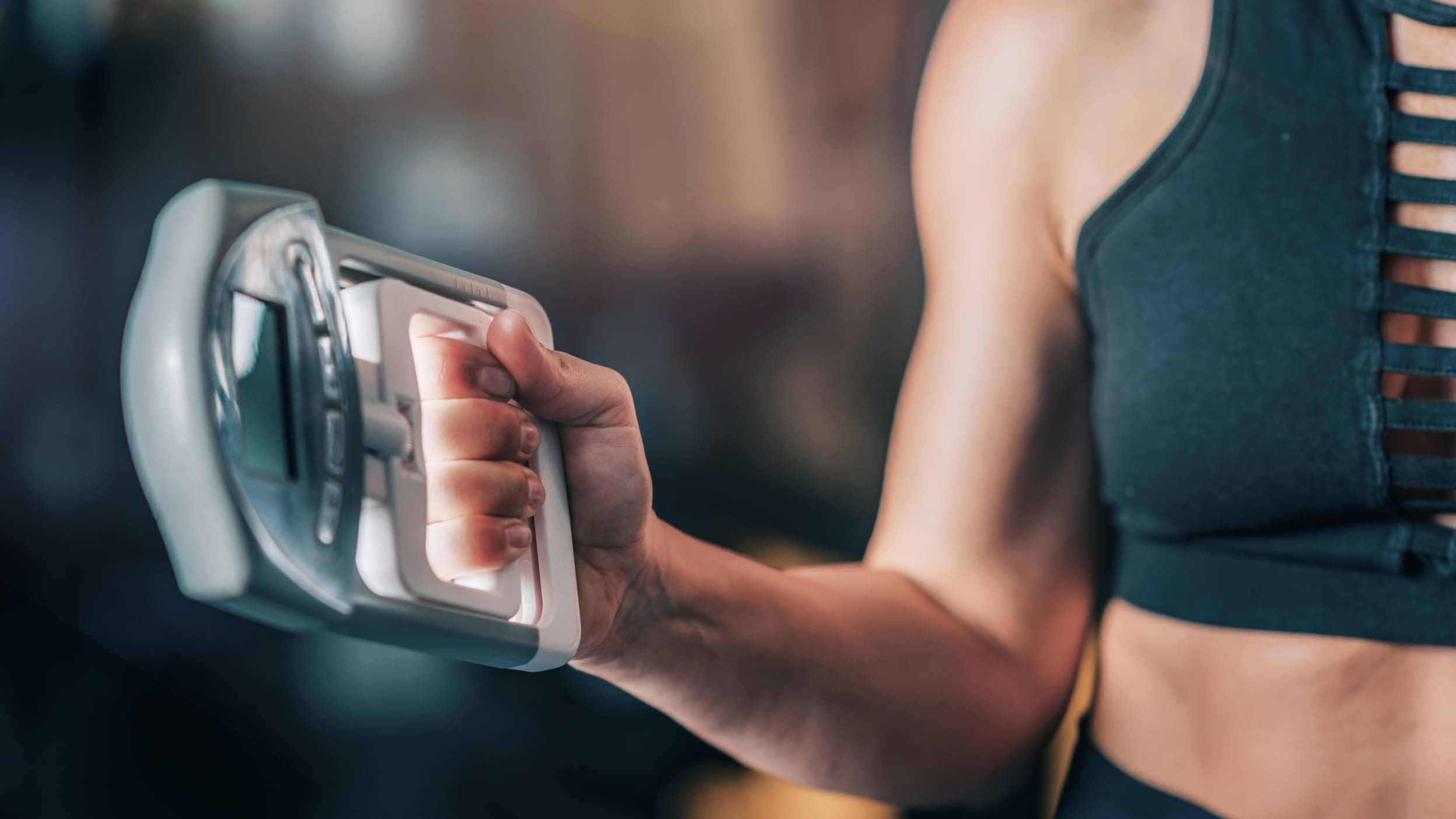
- Grip trainers or adjustable grippers for measurable progression
- Chalk or liquid grip for better hold and reduced slipping
- Wrist straps used sparingly to support heavier lifts
Recovery tips:
- Massage your forearms and palms after training to release tension
- Alternate between heat and cold compresses to boost blood circulation
- Prioritize sleep and rest days for optimal muscle recovery
Supplements that help:
- Magnesium glycinate: Supports nerve and muscle relaxation
- Omega-3 fatty acids: Reduce inflammation and support joint mobility
- Collagen and protein: Aid in tendon and muscle repair
When I started paying attention to recovery, my grip improved twice as fast. Strong hands depend as much on rest as they do on resistance.
Common Mistakes That Keep Women Stuck
Over the years, I’ve noticed several habits that prevent women from developing strong grip strength.
- Over-relying on gloves and straps: These tools help temporarily but reduce natural grip development.
- Skipping warm-ups: Cold muscles fatigue faster and increase injury risk.
- Ignoring hormonal shifts: Training with the same intensity all month can lead to burnout.
- Neglecting endurance: Grip isn’t only about raw strength; it’s about how long you can hold.
- Overtraining: Too much volume without rest leads to inflammation and slower recovery.
Avoiding these mistakes doesn’t just protect your hands; it helps your entire body perform better. Small, consistent improvements compound into long-term strength.
The Mind-Body Connection Behind Grip Power
There’s a powerful psychological link between grip and confidence. Your hands are your main connection to the world and to every weight you lift. When your grip feels weak, it affects how secure and grounded you feel during movement.
I’ve coached women who were physically strong but still doubted themselves because their hands would give out early. Once they built grip endurance, their mindset transformed. They stood taller, lifted more confidently, and carried that sense of control into everyday life.
A strong grip reminds you that you can hold on, both physically and emotionally. It builds resilience in ways that go far beyond the gym.
FAQs
1. Why is my grip weaker than my legs and back?
Because larger muscle groups develop faster than smaller stabilizers. Grip training balances your body’s strength.
2. Should women train grip strength separately?
Yes. Ten to fifteen minutes of grip work two to three times a week can dramatically improve your overall strength.
3. How long does it take to build noticeable grip strength?
Most women see results within four to six weeks, depending on training consistency and recovery habits.
4. How can I improve grip without heavier weights?
Use isometric holds, towel wringing, and rice bucket drills to build strength through endurance and tension.
5. Does grip strength affect overall performance?
Absolutely. A stronger grip enhances muscle activation, posture, and lifting efficiency across all workouts.
Final Thoughts
If there’s one thing I’ve learned through years of training women, it’s that strength isn’t just about lifting heavier weights. It’s about feeling capable, connected, and confident in what your body can do. Your grip is that connection. It’s the bridge between effort and control.
When your hands grow stronger, everything else improves. Your lifts feel smoother, your posture steadier, and your energy more balanced. You begin trusting your body in a new way. Aligning your training with your hormonal cycle only deepens that strength.
I’ve seen women transform their entire fitness journey by focusing on something as simple as grip strength. It’s a small change that creates massive shifts in both performance and self-belief.
Start with what you can do today. Be consistent. Listen to your body’s rhythm. Over time, your hands will not only hold more weight but will also remind you of how much power you already possess.