Table of Contents
Walk into any supplement store or scroll through your feed and you’ll see it:
“Clinically dosed.”
“Scientifically formulated.”
“Backed by research.”
But here’s the uncomfortable truth.
Only around 6% of sports science research has been conducted on female-only groups.
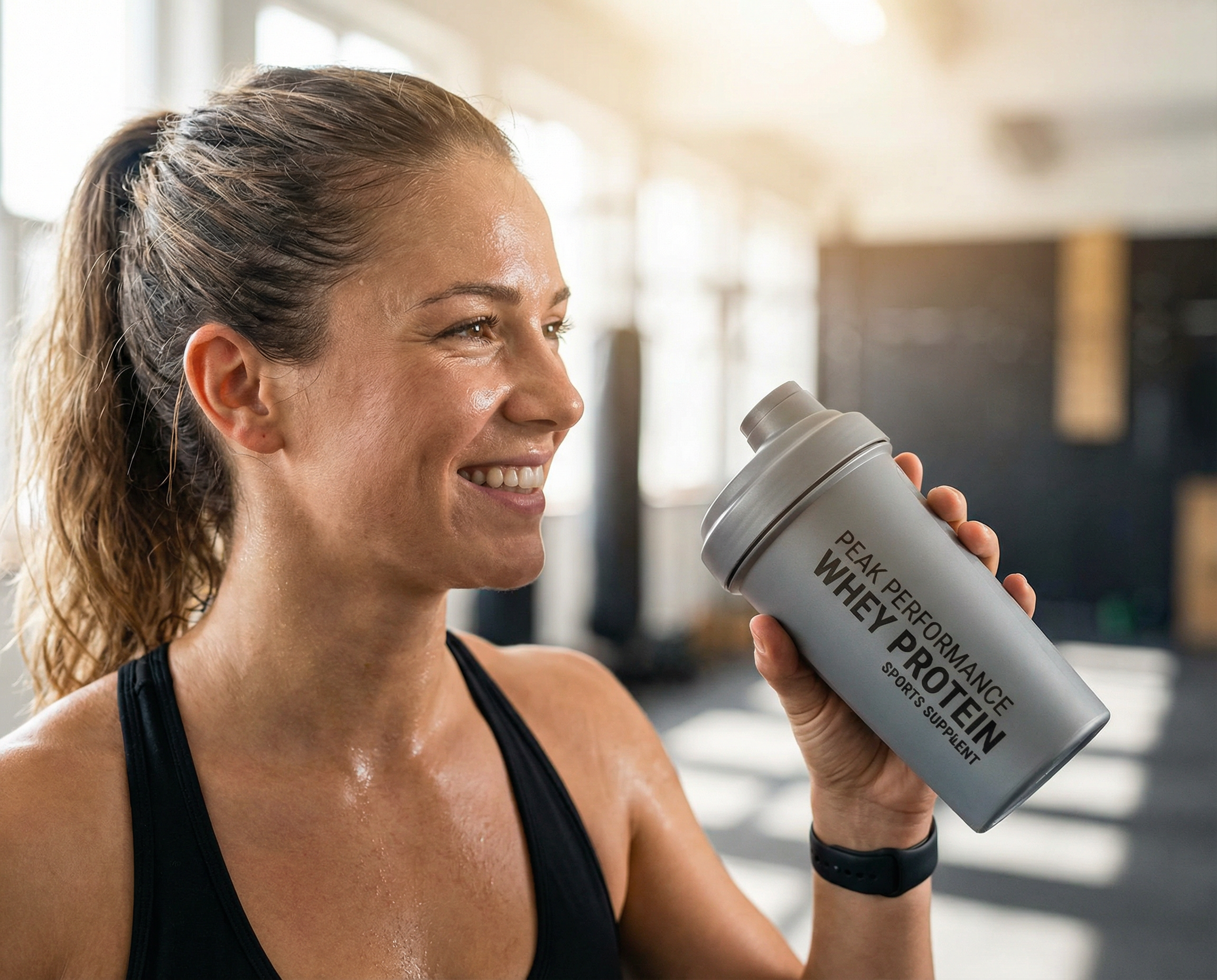
And yet, the vast majority of sports supplements on the market are sold to women as if they were built for them.
They weren’t.
The 6% Problem in Sports Science
For decades, sports science research has overwhelmingly focused on male participants.
There are several reasons often given:
- Researchers viewed women’s hormonal fluctuations as “too complex” to control for.
- Male-only studies were considered easier to standardise.
- Funding and historical bias favoured male athletic performance.
The result?
Most of what we “know” about training, recovery, muscle growth, hydration, and supplementation is derived primarily from male physiology.
Then the industry does something subtle but powerful:
It repackages male-based research into “unisex” products.
Why Male Physiology Is Not the Same as Female Physiology
This isn’t about politics. It’s biology.
Women experience:
- Monthly hormonal fluctuations across the menstrual cycle
- Differences in substrate utilisation (greater fat oxidation at certain phases)
- Different inflammatory and recovery responses
- Different thermoregulation patterns
- Higher risk of certain micronutrient deficiencies (e.g. iron)
Yet most pre-workouts, recovery formulas, and performance stacks are designed around:
- Stable testosterone-dominant hormone profiles
- Research conducted on fasted, young male athletes
- Acute dosing protocols tested on men
When women take these supplements, they are essentially participating in an uncontrolled experiment.
The Hidden Cost of “Unisex” Supplements
If supplements are based on male physiology, what happens to women?
Often:
- Energy feels inconsistent
- Training feels harder at certain times of the month
- Recovery fluctuates
- PMS symptoms interfere with consistency
- Progress stalls despite effort
The problem is not discipline.
It’s not motivation.
It’s not “overtraining.”
It may simply be that the system women are using was never designed with their physiology in mind.
Hormones Change Everything
Across the menstrual cycle, oestrogen and progesterone rise and fall in predictable patterns.
These hormonal shifts influence:
- Strength output
- Perceived exertion
- Glycogen utilisation
- Body temperature
- Sleep quality
- Fluid balance
- Mood and motivation
Yet most supplements assume the body operates the same way every day of the month.
It doesn’t.
A formula that works well in the follicular phase may not support the luteal phase in the same way.
But traditional supplement models ignore this entirely.
Why Hasn’t This Changed?
There are a few reasons:
- Reformulating for women requires new research.
- Cycle-based design is more complex.
- Mass-market products are easier to sell.
- The industry has historically been male-led.
Until recently, women were often excluded from trials because hormonal variability was seen as a “confounding variable” rather than a fundamental biological reality.
But that variability isn’t a flaw.
It’s information.
And it should be used, not ignored.
What Female-Centred Sports Science Looks Like
True female-focused sports supplementation would consider:
- Phase-based energy demands
- Iron status and micronutrient needs
- Stress and cortisol regulation
- Inflammation across the luteal phase
- Recovery variability
- PMS symptom support
- Sleep disruption patterns
It would stop asking women to adapt to male-designed systems.
And instead design systems around women.
The Future of Women’s Performance
The conversation is changing.
More researchers are:
- Running female-only trials
- Tracking outcomes across menstrual phases
- Studying injury risk in relation to hormones
- Exploring nutrition and supplementation through a female lens
But we are still catching up on decades of male-centric data.
Until research investment reflects women’s participation in sport, women will continue being handed products built on incomplete science.
The Bottom Line
If only 6% of sports science has been conducted on female-only groups, it should not surprise us that most supplements don’t fully support female physiology.
Women are not “small men.”
They are not hormonally stable across 30-day cycles.
They are not niche athletes.
They are half the population.
And they deserve sports science, training models, and supplements built specifically around their biology.
If you’re a woman who feels inconsistent in training at certain times of the month, it may not be a lack of discipline.
It may simply be that the system you’ve been given was never designed for you.