Table of Contents
When I started training seriously, I thought snacks were a luxury, not a necessity. I was focused on discipline, thinking willpower alone would carry me through any workout. I’d often show up to the gym under-fueled, proud of my empty stomach and my mental grit.
That pride faded fast. I started to notice that no matter how hard I trained, my energy dipped halfway through. My focus would blur, and even simple lifts felt impossible. It was frustrating because I knew I had the motivation, but my body simply wasn’t cooperating.
Eventually, I realized that what I was missing wasn’t effort but energy. My body needed fuel, not just at mealtime but between meals too. That’s when I started experimenting with snacks, not just for comfort but for performance. The difference was night and day. I could train longer, recover faster, and think clearly throughout the day.
I stopped seeing snacks as guilty pleasures and started treating them as a form of self-respect. They became my secret training tool, especially during the tough days when hormones or fatigue wanted to take over.
Why Cycle Safe Fuel Matters on Hard Days
There was a time when I didn’t connect my fluctuating energy to my menstrual cycle at all. Some days I’d feel unstoppable, and others I’d struggle to get through warmups. I used to think it was just bad luck or poor motivation. But once I started tracking my cycle, the pattern became clear.
My energy, cravings, and mood were closely linked to my hormones. The week before my period, I often felt hungrier, more bloated, and more fatigued. On those days, pushing through a tough training session without adjusting my nutrition left me exhausted and frustrated.
That’s when I learned about cycle-safe fueling. It means eating in sync with your hormonal shifts instead of fighting them. On harder days, particularly during the luteal and menstrual phases, I started adding small, nutrient-dense snacks that balanced protein, healthy fats, and complex carbs.
The difference was remarkable. I stopped hitting energy walls, my mood stabilized, and I recovered faster. Instead of resisting my body, I learned to work with it. Fueling with intention helped me feel strong even when my hormones were doing their own thing.
How Hormones Affect Energy and Cravings
Once I began studying how hormones influence metabolism, everything about my training made more sense.
During the follicular phase, which is roughly the first half of your cycle, estrogen levels rise. This hormone makes your body more efficient at using carbohydrates for energy, which is why workouts tend to feel smoother and lighter. I naturally gravitate toward lighter foods during this phase, like smoothies, fruits, and crisp salads.
Then comes the luteal phase, after ovulation. Progesterone takes the lead while estrogen dips. Your metabolism increases slightly, your appetite grows, and your body temperature rises. You might crave heavier, more comforting foods, and that’s not weakness it’s biology. Your body is burning more energy and asking for more support.
Before I understood this, I used to fight those cravings. I’d eat less, thinking I was being disciplined. But that only left me more tired and irritable. Once I embraced what my body was asking for, I started fueling smarter instead of harder.
Your hormones are not the enemy. They’re your built in performance guide. Understanding their rhythm changed how I trained and how I ate forever.
The Science of Cycle-Safe Snacks
When I started experimenting with cycle-safe snacks, I realized it wasn’t about calories it was about composition. I needed to give my body a balanced mix of carbs, protein, and fats to keep energy stable and recovery smooth.
Here’s the framework I use when building snacks that actually work:
| Snack Component | Why It Matters | Example Foods |
| Complex Carbs | Provide slow, steady energy without blood sugar spikes | Oats, brown rice, sweet potatoes |
| Protein | Repairs muscles and stabilizes appetite | Greek yogurt, boiled eggs, protein shakes |
| Healthy Fats | Regulate hormones and support endurance | Avocado, almond butter, chia seeds |
| Micronutrients | Aid recovery and improve focus | Berries, pumpkin seeds, dark chocolate |
When I apply this formula, I’m not just eating for energy I’m eating for hormonal balance. These nutrients also help reduce PMS symptoms like bloating, fatigue, and brain fog.
Cycle-safe snacks don’t have to be complicated. They just need to respect what your body is doing.
My Favorite Female Fitness Snacks for Strength and Recovery
Over time, I built a rotation of snacks that I know will always deliver. These have carried me through heavy training days, hormonal dips, and even long work hours when I needed steady energy.
1. Greek Yogurt with Berries and Pumpkin Seeds
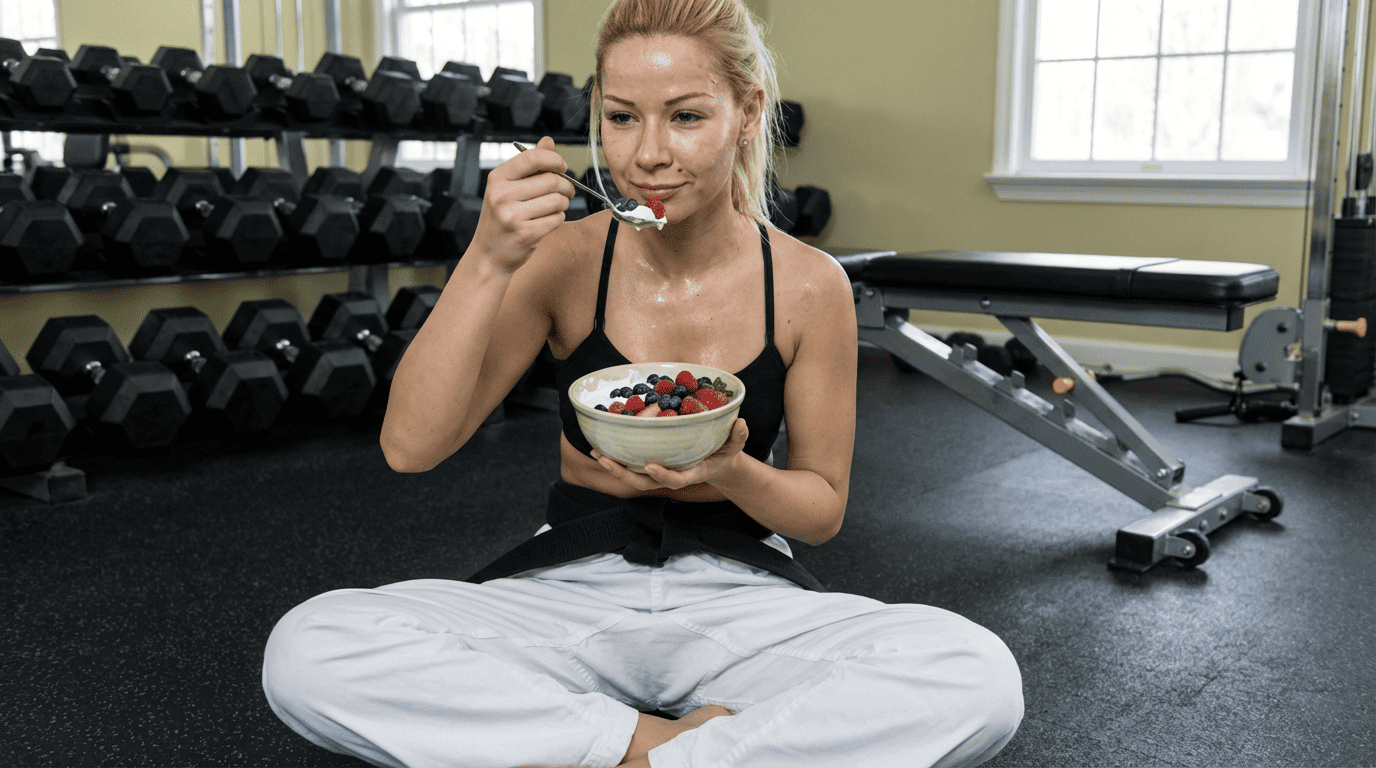
This is my post-workout staple. The protein in yogurt helps repair muscles, the berries add antioxidants, and pumpkin seeds provide magnesium for relaxation. It’s light, satisfying, and perfect for recovery.
2. Almond Butter Rice Cakes
This combo is quick and simple. Rice cakes give quick carbs for energy, and almond butter adds fats to keep me full. I love this before workouts, especially during the luteal phase when I burn energy faster.
3. Chocolate Banana Protein Smoothie
This one feels like dessert but works like fuel. I blend banana, cocoa powder, protein powder, and oat milk. It supports muscle recovery, fights bloating, and helps with chocolate cravings in a healthier way.
4. Sweet Potato Energy Bites
I make these by mixing mashed sweet potato, oats, nut butter, cinnamon, and honey. They’re portable and give me a balanced mix of slow carbs and healthy fats.
5. DIY Trail Mix
Most store-bought trail mixes are too sweet, so I make my own with almonds, walnuts, dark chocolate, and dried cherries. It’s energizing and rich in healthy fats.
These snacks are not about restriction they’re about support. They make hard days easier, training stronger, and recovery smoother.
What to Eat Before and After a Tough Workout
Timing snacks is as important as choosing the right ones. I used to eat too little before workouts, thinking I’d burn more fat. Instead, I ended up burning out faster. Now I plan my snacks strategically.
Before a workout:
I eat something light that gives me energy without weighing me down. A banana with peanut butter, oatmeal with chia seeds, or a rice cake with almond butter works best. During my luteal phase, I go slightly heavier to compensate for higher calorie needs.
After a workout:
My focus is on recovery. I choose snacks that replenish glycogen and support muscle repair, like a smoothie with spinach, protein powder, and cocoa. If I’m training late in the day, I add magnesium-rich foods to help me sleep better.
Consistency is everything. When I fuel properly before and after, my soreness decreases, my strength builds faster, and my mood stays balanced.
How to Avoid Bloating and Energy Crashes
For years, I believed eating healthy meant eating raw and high-fiber foods all the time. But during certain phases of my cycle, that approach made me feel bloated, heavy, and sluggish.
What helped was changing texture and temperature. On hard days, I choose warm, cooked snacks like oats or sweet potatoes. They’re easier on digestion and gentler on the body. I also stay mindful about caffeine. Too much coffee can spike cortisol and worsen fatigue when hormones are low.
I’ve learned that stable energy comes from balance, not restriction. A handful of nuts or a warm smoothie often does more for my body than another cup of coffee or a protein bar filled with artificial ingredients.
Real-World Lessons from Coaching Women Through Low-Energy Phases
As a coach, I’ve seen so many women struggle with fatigue or plateaus that have nothing to do with effort. Usually, the problem is under-fueling.
One of my clients, Sarah, trained consistently but always felt wiped out the week before her period. We added simple snacks like Greek yogurt, trail mix, and a magnesium supplement. Within a few weeks, her workouts improved dramatically, and her mood swings eased.
Another client, Mia, relied on caffeine to push through her workouts but ended up more tired after training. We swapped her pre-workout coffee for a smoothie with fruit and protein. Her endurance improved, and she no longer felt jittery or anxious post-session.
These stories remind me that small, consistent changes often create the biggest breakthroughs. Snacks might seem minor, but when they align with your cycle, they can completely transform how you feel and perform.
FAQs
What are the best snacks for female fitness during hard days?
The best snacks include a mix of protein, healthy fats, and complex carbs. Examples are yogurt with seeds, rice cakes with almond butter, and smoothies with fruit and protein powder.
How do snacks help during the luteal phase?
Your metabolism speeds up during the luteal phase, so you need more energy. Snacks help stabilize blood sugar, reduce cravings, and support recovery.
What snacks reduce bloating and fatigue?
Warm, easily digestible foods like oatmeal, bananas, and smoothies are excellent choices. Magnesium-rich foods such as pumpkin seeds and dark chocolate also help reduce water retention.
Final Thoughts
After years of trial, error, and observation, I’ve realized that strength training isn’t only about muscles it’s about understanding your body. Learning how to fuel yourself according to your cycle is one of the most powerful things you can do as a woman.
Snacks might seem like small details, but they’re part of the bigger picture. They provide stability, nourishment, and resilience. When you eat with awareness instead of guilt, your body rewards you with consistent energy, better focus, and deeper recovery.
On those hard days when motivation is low and your body feels heavy, remember that you’re not failing, you’re just in a different phase. Listen, adapt, and fuel accordingly.
Strength isn’t just built in the gym; it’s built in how you treat yourself between the workouts. The right snack, at the right time, can turn an ordinary day into a powerful one.